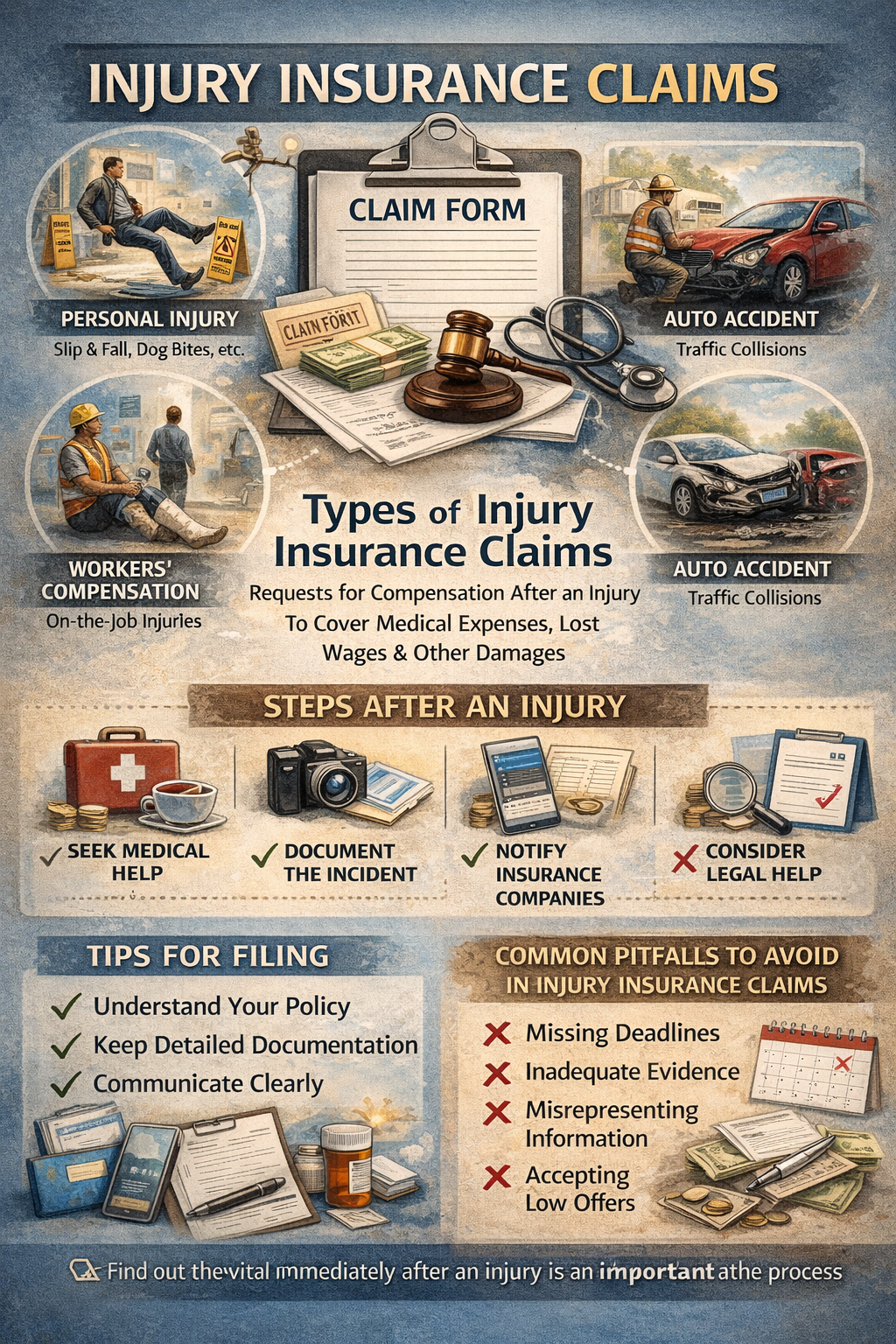
Injury insurance claims are requests for compensation submitted to an insurance provider following an incident that results in physical harm to an individual. These claims serve as a vital mechanism for accessing financial resources necessary to cover medical expenses, lost wages, and other damages sustained due to the injury. Understanding the various types of injury insurance claims is crucial for navigating the process efficiently and successfully.
One of the most prevalent types of injury claims is personal injury claims, which arise from situations such as slip and fall incidents, dog bites, or other accidents caused by negligence. In these cases, the injured party seeks compensation from the party at fault or their insurer to recover losses related to medical treatment, rehabilitation, and pain and suffering. Another significant category is workers’ compensation claims, which are specifically designed for employees injured in the workplace. These claims provide benefits to cover medical costs and lost wages, irrespective of fault, and are a fundamental safety net for workers.
In addition to personal injury and workers’ compensation claims, auto accident claims are a major subset within injury insurance. These claims can be complex, involving multiple parties and insurance companies. Victims of traffic collisions often file claims to cover damages to their vehicle, medical expenses, and compensation for emotional distress. Given the different types of injury claims, the importance of filing accurately and promptly cannot be overstated.
Timeliness in filing an injury insurance claim significantly influences the outcome. Delays can result in lost evidence or diminished credibility, which may hinder the claimant’s ability to secure fair compensation. Ultimately, understanding the nuances of injury insurance claims is essential in effectively navigating the compensation process and ensuring that individuals obtain the financial support required to recover fully from their injuries.
Steps to Take Immediately After an Injury
Experiencing an injury can be overwhelming; however, taking immediate and appropriate actions is essential for a successful injury insurance claim. The first step is to seek medical attention, regardless of the severity of the injury. Prompt medical evaluation not only ensures that you receive necessary care but also creates a medical record that will be vital when filing your claim.
After addressing your health, it is critical to document the incident thoroughly. Begin by writing down the details surrounding the injury, including the date, time, and location. Describe how the injury occurred, including any specific actions or negligence that led to the incident. This documentation provides a clear narrative that supports your claim.
Additionally, gathering evidence is paramount. If possible, collect photographs of the scene, the injury itself, and any contributing factors such as hazardous conditions or malfunctioning equipment. Identifying and contacting witnesses who can provide testimonials about the incident may also strengthen your case. Their statements can corroborate your version of events and illustrate negligence if applicable.
Furthermore, it is important to notify the relevant insurance companies as soon as possible. This includes your own health insurance provider and any liability insurance associated with the party responsible for your injury. Timely notification can help facilitate the processing of your claim and mitigate any potential issues due to delays or disputes.
In conclusion, taking these critical steps immediately after sustaining an injury is essential. Seeking medical care, documenting the incident, gathering evidence, and notifying insurance companies can all significantly impact the likelihood of a successful claim. Act promptly to ensure that every detail is captured accurately, enhancing your chances of receiving the maximum compensation possible.
Tips for Filing Injury Insurance Claims Effectively
Filing an injury insurance claim requires careful attention to detail and thorough understanding of your policy. To maximize compensation and avoid unnecessary delays, follow these recommended tips. First, it’s crucial to thoroughly understand the terms outlined in your insurance policy. Familiarize yourself with the coverage limits, exclusions, and specific procedures necessary for filing a claim. Many claims are denied simply because applicants overlook or misunderstand policy stipulations.
Next, maintaining detailed documentation is vital. From the moment the injury occurs, start gathering evidence related to the incident. This includes photographs of the injury, medical records, police reports if applicable, and bills related to treatment. Documenting the progression of your recovery is equally important; keep records of any missed workdays and associated loss of income. This information can significantly strengthen your claim.
Clear and effective communication with your insurance provider is another important step. When discussing your case, be honest and concise. Avoid any ambiguity in your explanations, and ensure that all communications are documented. If your insurer requests additional information, provide it promptly to avoid delays in the claims process.
Lastly, consider seeking professional legal assistance if your claim is particularly complex or if you’re facing resistance from your insurer. An experienced attorney can offer invaluable insight, help interpret complicated policy language, and advocate on your behalf. Many individuals are unaware of their rights, and a qualified professional can ensure that you receive the full compensation to which you are entitled. By following these tips, you can navigate the claims process more effectively and increase the likelihood of a favorable outcome.
Common Pitfalls to Avoid in Injury Insurance Claims
Filing an injury insurance claim can be complex, and several common pitfalls often hinder individuals from obtaining maximum compensation. One significant mistake is failing to adhere to statutory deadlines. Each jurisdiction has specific timeframes within which claims must be filed. Missing these deadlines can result in losing the right to claim compensation altogether. Therefore, it is essential to familiarize oneself with the relevant laws to ensure all claims are submitted timely.
Another common error involves inadequate evidence submission. Insufficient documentation can severely limit the chances of receiving a fair settlement. Victims should gather all necessary information, including medical records, accident reports, and witness statements that substantiate their claims. This evidence serves as the foundation for the legitimate pursuit of compensation, making thorough documentation critical.
Misrepresentation of information is also a substantial pitfall that can jeopardize the success of an injury insurance claim. Providing inaccurate details, whether intentional or inadvertent, may lead insurers to deny claims based on perceived dishonesty. It is crucial for individuals to be truthful and transparent throughout the claims process.
Finally, accepting low initial settlement offers without proper consideration is a significant misstep. Insurers often extend early settlements to limit their liabilities, which might not adequately cover long-term damages such as ongoing medical expenses or lost earnings. Before agreeing to any settlement, individuals should evaluate the full scope of their injuries and potential future costs, ideally consulting with legal or insurance professionals who can provide guidance aligned with their specific circumstances.