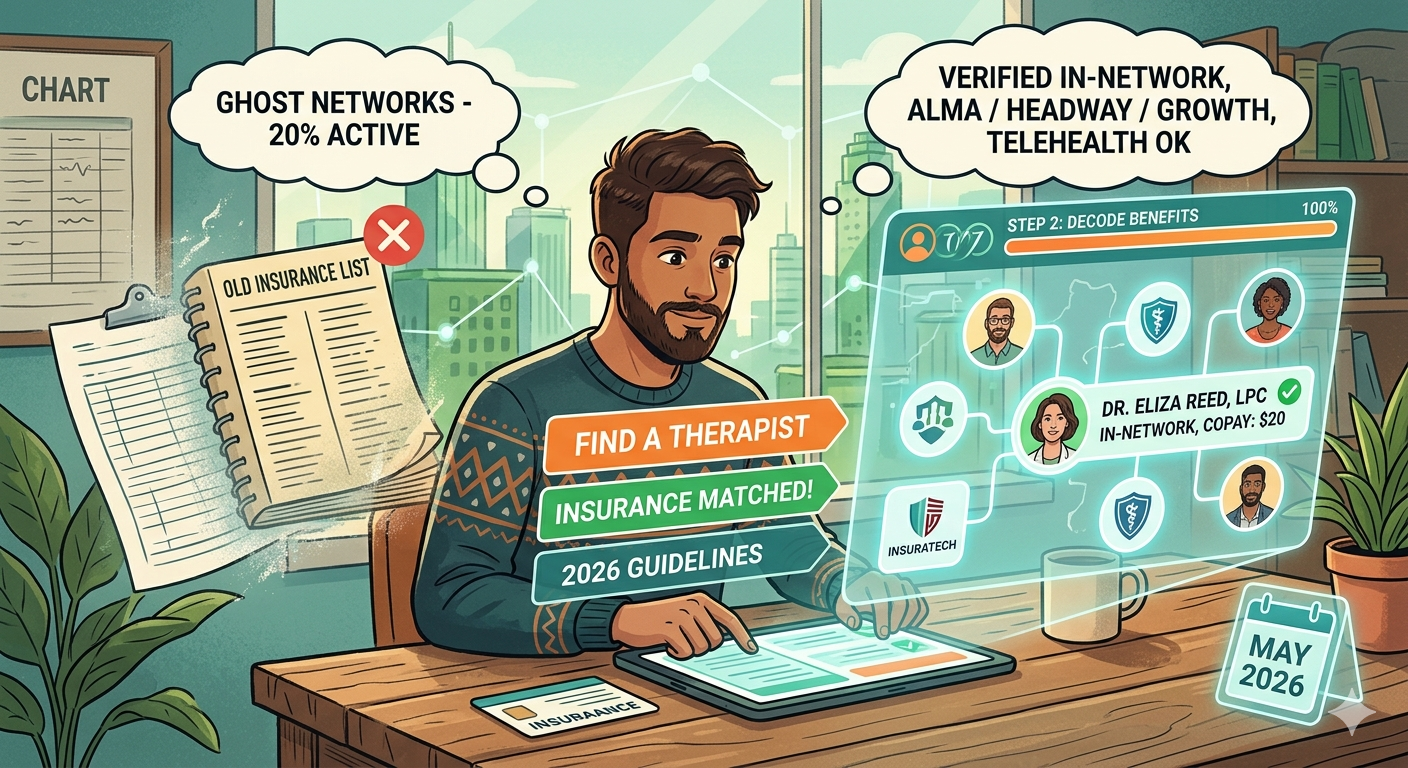
Meet Marcus. After months of dealing with burnout and nagging anxiety, he finally made the brave decision to seek therapy. He knew exactly what he wanted: a licensed professional to talk to weekly. But as he sat down with his laptop, he bumped into the most notorious hurdle in modern healthcare—trying to find a qualified therapist who actually takes his health insurance.
If you have tried searching for a mental health professional lately, Marcus’s frustration probably sounds incredibly familiar. While federal law mandates that health insurance cover mental health treatment at a similar level to physical health, the reality on the ground is stark: fewer than 40% of therapists actively take insurance.
The good news? Navigating this matrix in 2026 is vastly different than it was just a few years ago. Thanks to emerging tech platforms and shifting healthcare models, the path to affordable therapy is entirely doable if you know exactly where to look. Let’s map out your game plan.
Step 1: Decode Your Mental Health Benefits First
Before you even open a directory, you need to know exactly what your insurance plan expects from you. Marcus assumed “covered” meant “free,” only to realize he had to meet a deductible first.
Grab your insurance card and log into your provider’s online portal to find your Summary of Benefits and Coverage. You want the answers to these three specific questions:
-
What is my copay or coinsurance? (A copay is a flat fee, like $20 per session; coinsurance is a percentage, like 20% of the total cost).
-
Do I have a separate mental health deductible? (You may have to pay entirely out-of-pocket until you hit a certain threshold).
-
Does my plan require a referral? (Some HMO plans require a primary care doctor to refer you to a therapist before they will cover it).
Step 2: Skip the Outdated Insurance Directories
The oldest trick in the book is using the “Find a Provider” directory directly on your insurance company’s website. Unfortunately, these lists are notorious for “ghost networks”—outdated databases filled with therapists who have retired, changed locations, or stopped accepting that insurance months ago.
Instead, look to modern, third-party credentialing platforms that explicitly partner with insurance companies to keep data updated in real-time. Platforms like Grow Therapy, Alma, and Headway act as matching bridges. They allow you to input your exact insurance policy details up front, letting you browse hundreds of local and virtual therapists with 100% transparent pricing before you ever book.
Step 3: Embrace the Power of Telehealth
If you are limiting your search strictly to an office within a 15-mile radius of your house, you are drastically shrinking your odds.
Opting for online therapy opens up a massive pool of potential providers, because a therapist only needs to be licensed in your state—not located in your city—to treat you. Major insurance-vetted teletherapy giants like Talkspace, Amwell, and Brightside Health accept a wide variety of commercial insurance plans, frequently reducing your per-session cost to just a standard copay.
Step 4: The 15-Minute Verification Call
Once Marcus found two or three prospective therapists online, he took one final, crucial safety step: the verification check.
Never take a directory’s word as absolute gospel. When reaching out to a therapist for a preliminary consultation, explicitly ask: “Are you currently an active, in-network provider for [Insert Your Exact Plan Name]?” For absolute certainty, give your insurance company a call, provide the therapist’s name and license number, and ask them to confirm the coverage.
What If You Truly Can’t Find an In-Network Match?
If your insurance network is incredibly restricted, you still have options to keep therapy within your budget:
-
Ask for a Sliding Scale: Many private-pay therapists reserve a few spots in their schedule for clients facing financial constraints, offering significantly discounted per-session rates.
-
Utilize Out-of-Network Benefits (Superbills): If your plan has out-of-network coverage, you can pay your therapist upfront, get a specialized receipt called a “Superbill,” and submit it to your insurer for partial reimbursement.
-
Look into CCBHCs: Certified Community Behavioral Health Clinics provide care utilizing a sliding fee scale based on your income, ensuring no one is turned away.
Protecting your mental health shouldn’t require financial ruin. By bypassing outdated insurance directories, utilizing insurance-integrating platforms, and verifying your benefits early, you can secure the support you deserve without the stress of unexpected bills.