We all know what anxiety feels like. It’s that familiar, tightening knot in your stomach before a big presentation, or the restless mind that keeps you awake scrolling through “worst-case scenarios” at 2:00 AM. In small doses, anxiety is completely normal—it’s just our brain’s ancient way of trying to keep us safe from perceived danger.
But there is a distinct line between normal, everyday stress and the kind of persistent anxiety that begins to hijack your life.
If you’ve been wondering whether your worry has crossed that line, or if you keep telling yourself, “It’s not bad enough to see a therapist yet,” this guide is for you. Let’s look at the real, human signs that it might be time to reach out for a helping hand.
The Telltale Signs It’s Time to Talk to Someone
Anxiety rarely announces itself with a sudden crisis. Instead, it usually erodes your peace of mind slowly, over weeks or months. Here are a few signs that your anxiety might be taking the driver’s seat:
-
Your World is Shrinking: Are you skipping social gatherings, avoiding certain driving routes, or turning down career opportunities because the thought of doing them makes you nauseous? When you start modifying your life to avoid anxiety triggers, it’s a major sign that the anxiety is in control.
-
The “What-Ifs” Are Constant: A healthy mind can worry about a problem and then move on. High anxiety traps you in an endless loop of catastrophic thinking, where every minor inconvenience turns into a future disaster.
-
Physical Symptoms Are Taking a Toll: Anxiety isn’t just in your head; it lives in your body. Chronic muscle tension, unexplained headaches, digestive issues (like IBS), and a racing heart are physical manifestations of a nervous system that refuses to power down.
-
Sleep Has Become a Battleground: If you are physically exhausted but your brain turns into a neon-lit billboard of every mistake you’ve ever made the second your head hits the pillow, anxiety is disrupting your body’s natural rhythm.
-
Your Coping Mechanisms Are Fraying: Relying heavily on distraction, endless scrolling, alcohol, or emotional isolation to “numb out” the noise usually means your internal tools aren’t enough anymore.
Why Therapy Isn’t a “Last Resort”
One of the biggest misconceptions about therapy is that you need to be experiencing a severe mental health crisis to justify going.
Think of therapy like car maintenance. You don’t wait for your engine to completely smoke and catch fire on the highway before you see a mechanic; you go when you hear a strange knocking sound or see a warning light. Therapy works best when it is proactive. It gives you a safe, judgment-free space to unpack your thoughts before they become completely overwhelming.
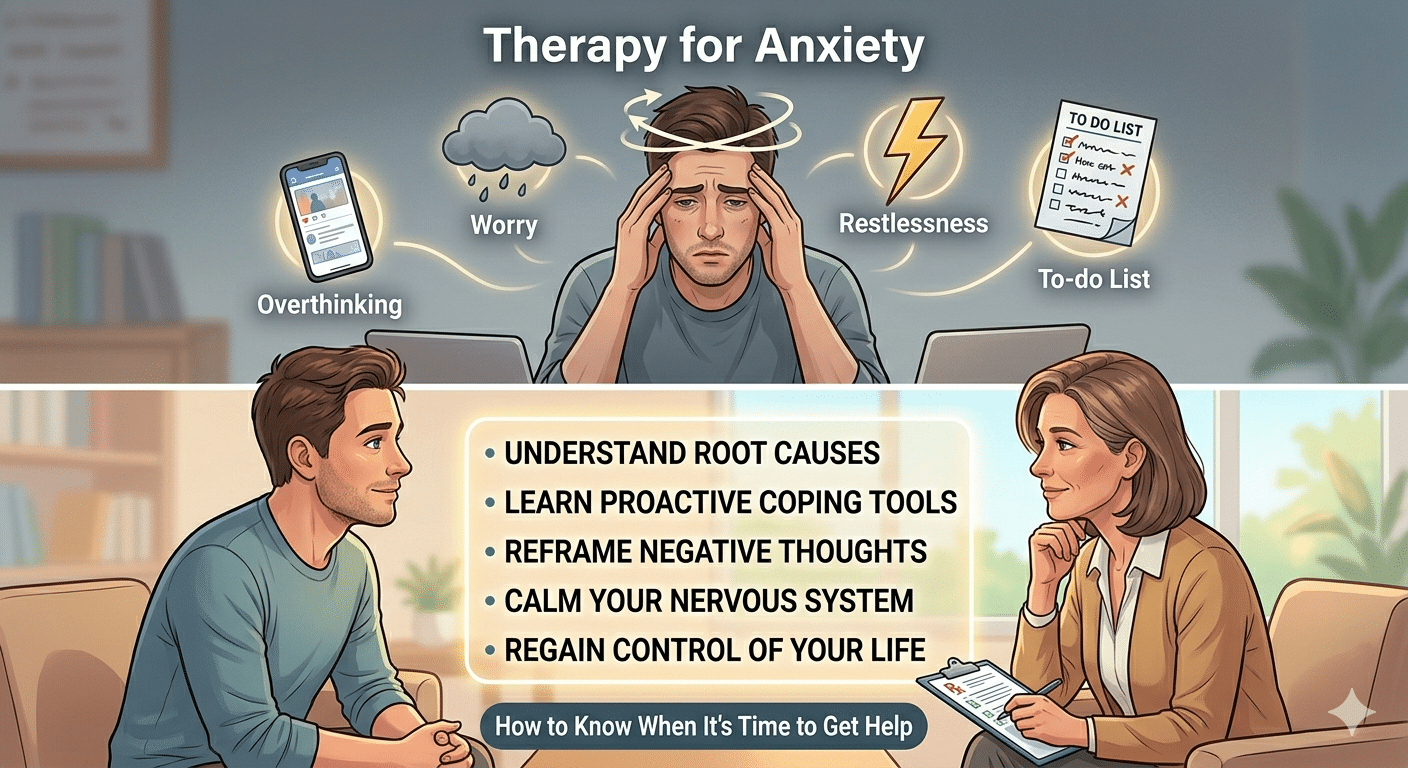
In therapy, you won’t just vent. A licensed professional will help you understand the root causes of your stress and equip you with practical, evidence-based tools (like Cognitive Behavioral Therapy or mindfulness techniques) to reframe your thoughts and calm your nervous system.
Taking the First Step
Admitting you need help isn’t a sign of weakness—it’s an act of profound self-awareness and courage. You don’t have to white-knuckle your way through life, pretending everything is fine while you’re drowning on the inside.
If your anxiety is making it harder to work, love, sleep, or just be, consider reaching out to a therapist. Healing doesn’t mean never feeling anxious again; it means learning how to sit with your anxiety without letting it run your life. You deserve to breathe a little easier.