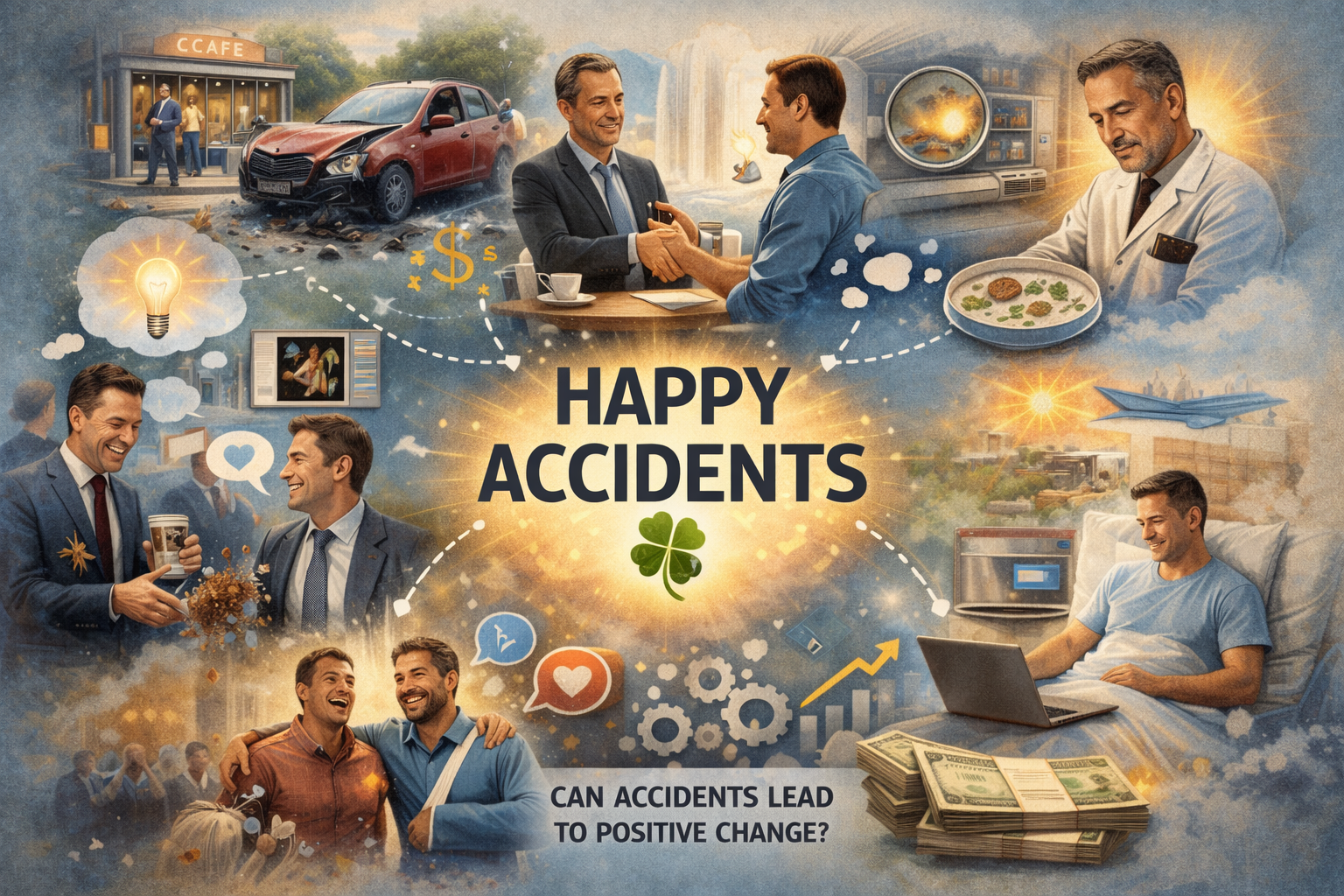
The term ‘accident’ typically describes an unexpected event that occurs unintentionally, often leading to negative consequences. However, not all accidents are created equal. The circumstances that constitute the ‘best’ accidents delve into how these unintended occurrences can catalyze positive change or serendipitous outcomes. Understanding the nuances surrounding accidents illuminates how perceptions can shift dramatically, transforming situations once deemed unfortunate into fortuitous moments.
A ‘best’ accident often emerges from a situation originally perceived as detrimental. For example, a car breakdown might lead an individual toward a local café where they meet a future business partner, thus sparking an entirely new career opportunity. Here, the so-called accident becomes a pivotal moment, illuminating the concept of serendipity—those fortunate discoveries made by chance. This emphasizes that while an accident may initially present itself unfavorably, its implications can yield favorable results.
Moreover, the psychology behind our perception of accidents plays a crucial role. Individuals often attribute meaning to events, reinterpreting them based on the outcomes they produce. An accident that leads to a positive change challenges conventional logic and encourages a deeper examination of life’s unpredictability. The best accidents can serve as reminders of life’s twists and turns and how our responses to adverse situations can redefine their impact on our journey.
Thus, defining an accident as the ‘best’ is rooted in an evaluation of outcomes rather than the events themselves. By approaching accidents with an open mind and recognizing the potential for growth, we can appreciate how the unexpected can indeed reshape our lives in the most remarkable ways.
Famous Accidental Discoveries and Innovations
Throughout history, numerous accidental discoveries have led to profound innovations, reshaping our understanding and interaction with the world. One of the most celebrated examples is the discovery of penicillin by Alexander Fleming in 1928. While conducting experiments on staphylococci, Fleming noticed a petri dish contaminated with mold. To his surprise, he observed that the bacteria surrounding the mold were killed, leading to the realization that the mold produced a substance that could combat bacterial infections. This moment was serendipitous, as Fleming had been aiming to identify better methods to fight infections rather than exploring mold properties. The eventual synthesis of penicillin marked a significant breakthrough in medicine, heralding the age of antibiotics and saving countless lives.
Another noteworthy accidental innovation is the invention of the microwave oven. In 1945, Percy Spencer, an engineer working with radar technology, was testing a magnetron when he noticed that a chocolate bar in his pocket had melted. Curious about this unexpected occurrence, Spencer experimented with other foods, ultimately discovering that the microwave emitted radiation that could heat food quickly. This unanticipated event led to the development of the first microwave oven, forever changing the way we prepare meals. Spencer’s innovation transformed kitchens around the world, promoting convenience and efficiency in food preparation.
These cases illustrate how accidents, rather than well-planned experiments, can lead to groundbreaking changes in science and technology. The initial reactions from their discoverers were often of disbelief or intrigue, driving further exploration and investigation. These accidental milestones have not only advanced scientific understanding but have also had a lasting impact on society, improving health outcomes and simplifying everyday tasks.
Personal Stories: Accidents in Our Lives
Accidents can often serve as unexpected turning points in our lives, leading us down paths we may never have considered. Many individuals recognize that certain mishaps have turned out to be blessings in disguise, allowing for personal growth or serendipitous connections. One individual recounts how a minor car accident introduced them to their current best friend, who happened to be a witness. Initially, they exchanged polite conversation, but what followed was an unbreakable bond forged through shared experiences that neither would have anticipated. Such stories exemplify how accidents can inadvertently create meaningful relationships.
Another account highlights a career opportunity that arose from a seemingly trivial mishap. A woman accidentally spilled coffee on an influential figure at a networking event. Instead of anger, the encounter sparked a candid discussion that led to a job offer she had not pursued. These reflections underscore how accidents can pivotally influence our professional trajectories, reminding us to embrace life’s unpredictability.
It is essential to recognize that personal growth often arises from unplanned events. Several individuals have shared tales of accidents that forced them to reassess their priorities, courageously leading them to pursue passions they had long ignored. One man described how a brief hospitalization due to an accident prompted him to finally commit to a long-held dream of starting a business. His story illustrates how unexpected challenges can ignite a renewed sense of purpose.
We invite readers to reflect on their own experiences with accidents that have impacted their lives positively. Have you encountered a moment that led to unexpected joy or personal growth? We encourage you to share your anecdotes to foster a collective understanding of how accidents can sometimes be the most transformative moments in our lives.
Resilience and Learning from Accidents
In the course of life, accidents and unforeseen events often catalyze powerful lessons and foster resilience. The ability to bounce back after encountering unexpected challenges is a hallmark of personal development and growth. When an accident occurs, whether it be a small mishap or a more significant life-altering event, our responses can significantly influence our outlook on life and our future endeavors. Rather than viewing accidents solely as negative occurrences, embracing them with a mindset of resilience can lead to transformative experiences.
Societal attitudes toward accidents also play a crucial role in shaping responses. Cultures that promote a narrative of learning and adaptation tend to encourage individuals to seek growth amidst adversity. When accidents are framed as opportunities for learning, individuals are more likely to cultivate an adventurous spirit, willing to engage with life’s unpredictability. This shift in perspective allows people to not only recover from setbacks but to thrive in the wake of such experiences.
Moreover, accidents provide valuable insights that can enhance safety and efficiency in various contexts. For instance, in industries where safety is paramount, analyzing past incidents can lead to improved protocols and preventive measures. The lessons derived from accidents can reverberate beyond the individuals directly affected, influencing wider societal practices and policies aimed at preventing similar occurrences in the future.
Ultimately, the process of learning from accidents fosters not only personal resilience but also contributes to communal growth. By acknowledging the potential for positive outcomes following accidents, both individuals and societies can embed a sense of adaptability into their frameworks. Embracing unpredictability, therefore, becomes an integral part of leading a fulfilling life, encouraging exploration and encouraging a proactive approach toward future challenges.