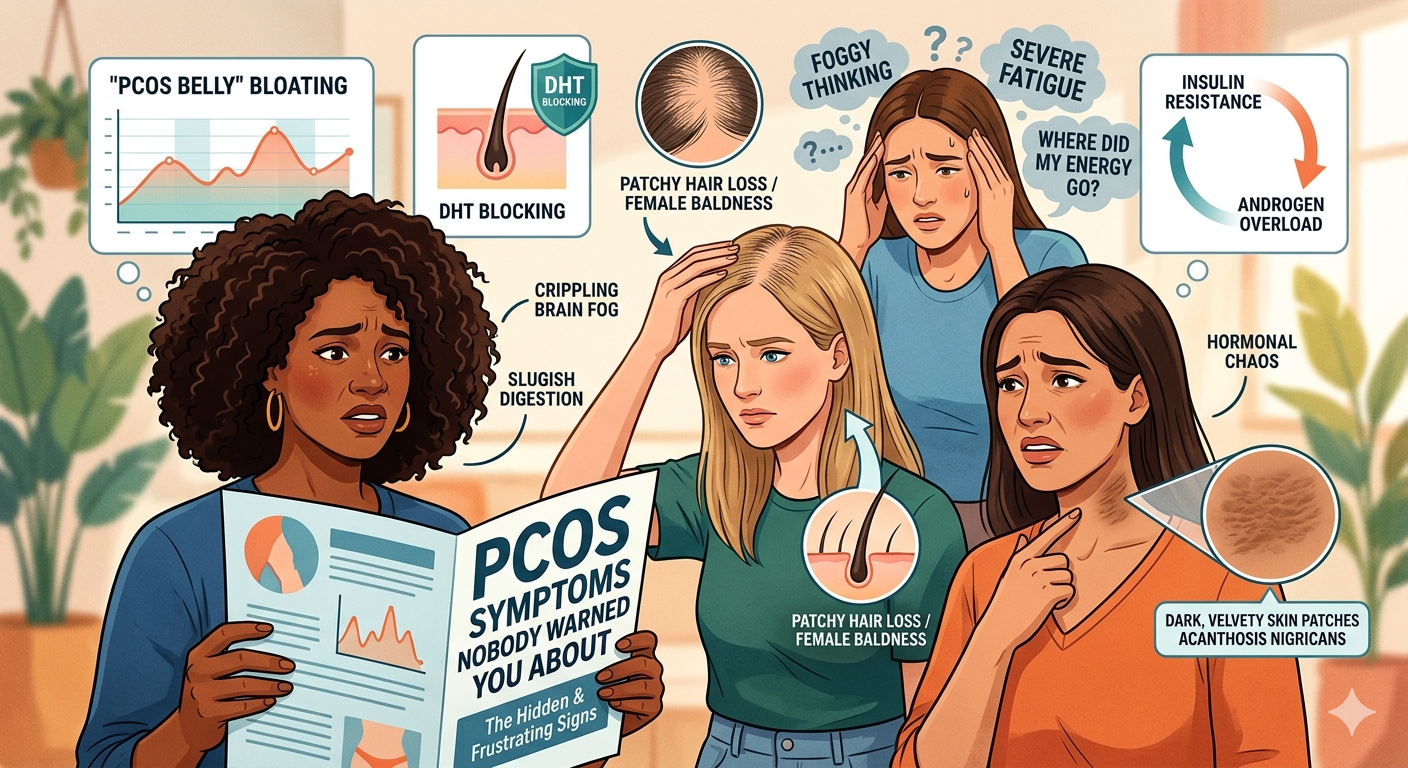
When you first get diagnosed with Polycystic Ovary Syndrome (PCOS), the information packet usually covers the “big three” symptoms: irregular periods, stubborn weight gain, and cystic acne.
But for millions of women, the daily reality of living with this endocrine disorder involves a completely different set of frustrating, confusing symptoms. These are the symptoms that don’t always make it onto the basic medical brochures—leaving many to wonder, “Is this actually my PCOS, or am I just imagining it?”
If you are navigating the hidden side of this condition, you aren’t alone. Let’s shine a light on the PCOS symptoms nobody warned you about, and more importantly, what you can actually do to manage them.
1. The Sudden, Patchy Hair Loss (Female Pattern Baldness)
While PCOS can famously cause excess hair growth on your face or chest (hirsutism), it can simultaneously cause the hair on your head to thin out.
Driven by elevated levels of androgens (male hormones) like testosterone, this symptom often manifests as a widening part or noticeable thinning near the crown of your head. It can be incredibly distressing to watch extra hair grow exactly where you don’t want it, while losing it where you do.
-
What to do: Ask your doctor to check your free and total testosterone levels. Many women find success by pairing a DHT-blocking shampoo with a targeted medical approach (like Spironolactone) or natural androgen-blockers like spearmint tea and saw palmetto.
2. “PCOS Belly” and Severe Digestive Bloating
You might know about the metabolic challenges of PCOS, but nobody prepares you for the intense, uncomfortable bloating often dubbed “PCOS belly.”
Because PCOS is deeply intertwined with systemic, low-grade inflammation and poor gut health, many women suffer from chronic slow digestion, irritable bowel symptoms, and intense food intolerances. This isn’t just standard bloating; it can feel like your abdomen changes an entire clothing size between morning and night.
-
What to do: Prioritize gut-healing protocols. Focus on a diverse intake of fiber, consider a high-quality probiotic, and experiment with an anti-inflammatory or low-FODMAP elimination diet to identify your specific trigger foods.
3. Dark, Velvety Skin Patches (Acanthosis Nigricans)
Have you noticed areas of your skin—particularly around the back of your neck, underarms, or groin—becoming noticeably darker, thicker, or velvety to the touch?
This is called Acanthosis Nigricans. It is not dirt, and scrubbing harder in the shower won’t make it go away. Instead, it is a direct, visible cry for help from your metabolic system, signaling severe insulin resistance. High levels of insulin cause skin cells to reproduce abnormally fast, leading to these hyperpigmented patches.
-
What to do: To fix the skin, you have to treat the root metabolic cause. Focus on balancing your blood sugar by pairing carbohydrates with plenty of protein and healthy fats. Supplements like Myo-Inositol or medications like Metformin are heavily utilized to improve insulin sensitivity and fade these patches over time.
4. Crippling “Brain Fog” and Severe Fatigue
Many women with PCOS experience a heavy, midday fatigue that no amount of sleep or coffee can fix. Alongside it comes brain fog—forgetting simple words, losing your train of thought, or feeling like your mind is trapped in mud.
This occurs because insulin resistance prevents glucose from efficiently entering your brain and muscle cells, leaving your body functionally starved of its primary energy source.
-
What to do: Avoid the temptation to prop yourself up with sugary energy drinks or simple carbs, which cause a massive blood sugar crash later. Instead, opt for complex carbohydrates, stay heavily hydrated, and focus on gentle, consistent movement like walking to help your body clear glucose from your bloodstream naturally.
Your Action Plan for Moving Forward
Managing PCOS requires looking at the whole picture, not just the symptoms on the surface. Use this checklist to advocate for your health at your next doctor’s appointment:
| Focus Area | What to Ask Your Doctor | Lifestyle Adjustment |
| Hormone Balance | “Can we run a full androgen and thyroid panel?” | Drink 2 cups of spearmint tea daily. |
| Metabolism | “Can we check my fasting insulin, not just fasting glucose?” | Prioritize eating protein at every meal. |
| Mental Energy | “Could my fatigue be linked to a Vitamin D or B12 deficiency?” | Incorporate 15-minute post-meal walks. |
PCOS can feel like a moving target, but understanding why your body is reacting this way is the first step toward regaining control. By treating the root causes—inflammation and insulin resistance—you can quiet the symptoms nobody warned you about and start feeling like yourself again.