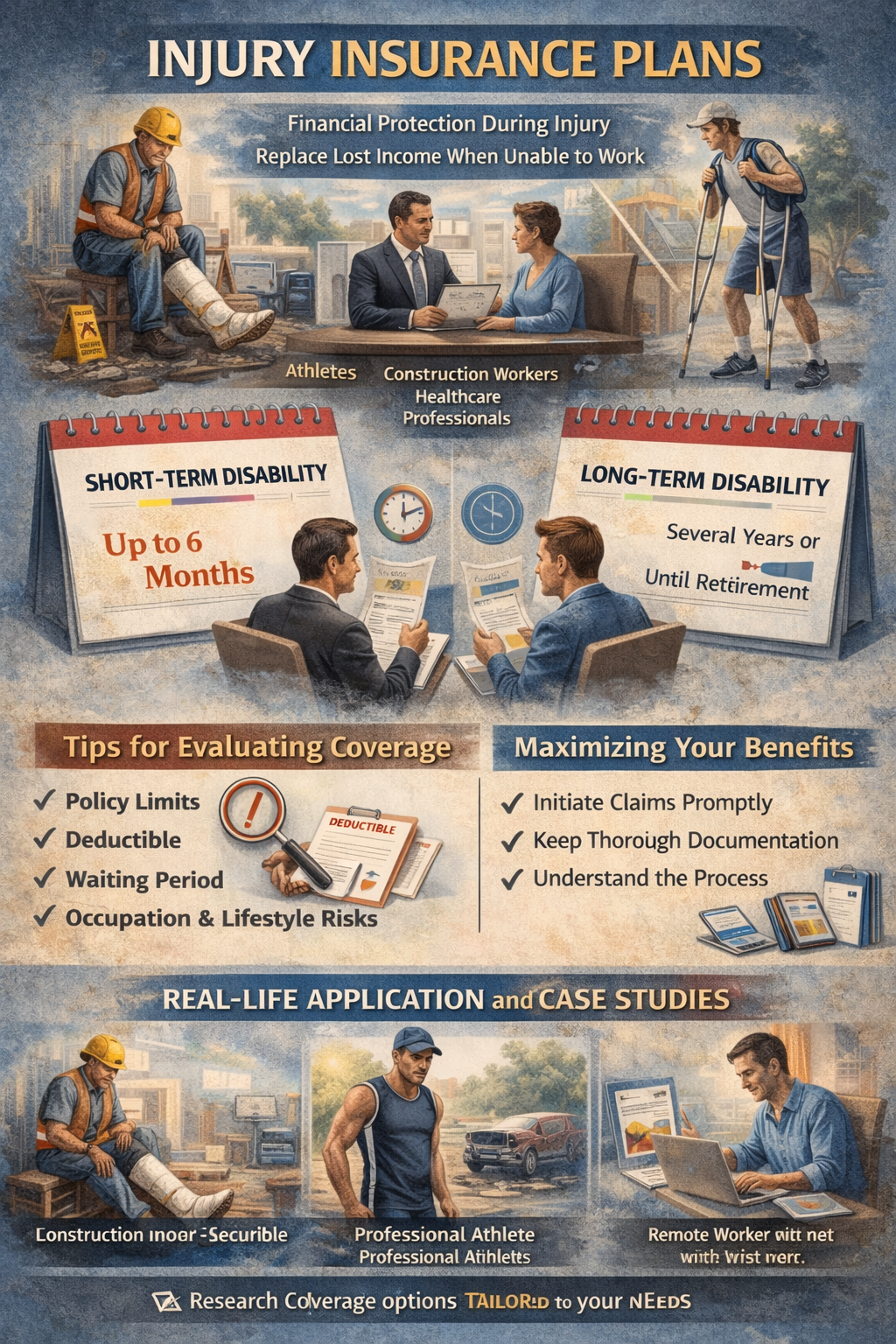
Injury insurance plans serve a crucial role in providing financial protection for individuals who may be injured and unable to work due to their physical incapacity. These plans are designed to replace a portion of the lost income, alleviating financial burdens while the insured recovers. They can be an essential part of an overall financial strategy, particularly for those whose livelihood is directly tied to their physical capabilities, such as athletes, construction workers, and healthcare professionals.
There are various types of injury insurance plans available, each tailored to meet different needs and circumstances. Short-term disability insurance is one such option, typically offering coverage for a limited period—usually up to six months—following an injury that results in temporary inability to work. Conversely, long-term disability insurance can extend benefits for several years, or even until retirement age, depending on the policy terms and the severity of the injury.
The key differences among these plans can greatly affect choice. While short-term policies generally have quicker processing times and easier qualification criteria, long-term policies often provide more extensive coverage that’s critical for serious injuries. Additionally, some plans offer coverage for specific types of injuries or circumstances, while others cover a broad range of potential incidents. Understanding these variances is vital because they directly influence coverage adequacy and the duration of benefits.
Injury insurance plans act as a financial safety net, ensuring that individuals can maintain their standard of living even when physical incapacitation occurs. For those with family dependents or financial commitments, securing an appropriate injury insurance policy is not just an option—it is a necessary step in safeguarding one’s financial future against unforeseen medical incidents.
Evaluating Coverage Options
When assessing injury insurance plans, various factors need consideration to ensure that the selected policy aligns with individual needs. Understanding policy limits is paramount, as these limits dictate the maximum amount the insurer will pay in the event of a claim. It is advisable to choose a plan that offers adequate coverage to minimize financial risks resulting from an injury.
Deductibles are another crucial aspect to evaluate in any injury insurance policy. The deductible represents the amount the policyholder must pay out-of-pocket before the insurance coverage kicks in. Selecting a deductible that aligns with one’s financial situation is essential, as higher deductibles may result in lower monthly premiums but can lead to significant costs during a claim. Balancing deductible amounts with affordable monthly payments is key to finding optimal protection.
Additionally, it is important to pay attention to waiting periods, which refer to the time frame that must pass before benefits become payable after sustaining an injury. Different policies may have varying waiting periods, and understanding this aspect helps ascertain how soon one can receive financial support. Those involved in high-risk occupations might prefer policies with shorter waiting periods for quicker financial assistance during recovery.
Moreover, assessing one’s occupation and lifestyle risks is critical when selecting coverage levels. Certain jobs inherently carry a higher risk of injury, which may necessitate enhanced coverage options. Similarly, individuals with active lifestyles may benefit from policies that account for potential injuries related to sports or recreational activities.
Lastly, it is imperative to be aware of common exclusions in injury insurance policies, which may limit or negate coverage for certain types of injuries, pre-existing conditions, or specific activities. Review these exclusions carefully to avoid surprises during the claims process and ensure the chosen plan offers comprehensive protection.
Maximizing Your Benefits
To make the most of your injury insurance plan, it is essential to adopt a proactive approach towards filing claims and maintaining documentation. Initiating the claims process promptly after an injury is crucial as many policies have time limits that could jeopardize your payout if missed. Begin by notifying your insurer as soon as feasible and follow their specific protocols to ensure a smooth initiation of your claim.
Documentation plays a vital role in substantiating your claim and maximizing benefits. Keep thorough records of all medical visits, treatments, and expenses related to your injury. Make photocopies or digital scans of important documents, such as medical bills and notes from healthcare providers, as these could serve as critical evidence for your claim. Additionally, maintain a detailed journal of your recovery process, which can provide insight into how your injury affects your daily life and ability to work.
Understanding the claims process is another key component in maximizing your benefits. Familiarize yourself with your policy’s terms and conditions, including eligibility criteria and any specific requirements for filing. Regular communication with your claims adjuster can clarify any uncertainties, helping you to navigate the process efficiently. Consider consulting with a legal professional if your claim faces challenges or denials.
It is also beneficial to stay informed about common pitfalls associated with injury insurance claims. Avoid delaying your claim, as this may imply a lack of urgency or seriousness regarding your injury. Be cautious with understatement or exaggeration of your injuries, as inaccurate representations can lead to complications or denial of claims.
Finally, regularly reviewing your injury insurance policy is crucial to adapting your coverage to your evolving needs. Life changes—such as new jobs or changes in health—should prompt a reassessment of your coverage, ensuring that you remain adequately protected.
Real-Life Application and Case Studies
Understanding the practical implications of injury insurance can significantly impact individuals when they need it most. Numerous case studies highlight how various injury insurance plans offer critical financial support during challenging times. For instance, consider the case of a construction worker who suffered a severe fall while on the job, resulting in multiple fractures. Thanks to his injury insurance policy, he received compensation that not only covered his medical expenses but also replaced a portion of his lost income during his recovery. This financial cushion allowed him to focus solely on rehabilitation without the added burden of financial stress.
Another notable example involves a professional athlete who sustained a debilitating knee injury that required extensive surgery. The athlete’s injury insurance plan provided a robust payout that extended beyond medical costs, covering his ongoing therapy and rehabilitation. The policy also accounted for future income loss due to reduced playing performance following the injury. This case illustrates how injury insurance can cater to very specialized needs, further advocating for the necessity of tailored coverage options.
In a more everyday context, a graphic designer working from home experienced a car accident that resulted in a sprained wrist, hindering her ability to work efficiently. Her injury insurance gave her the necessary financial support during her recovery, allowing her to hire temporary assistance while she healed. Such scenarios demonstrate the broad spectrum of incidents where injury insurance can serve as a lifeline.
When choosing the right injury insurance plan, it is crucial to assess individual circumstances, including occupation, lifestyle, and financial needs. Conducting thorough research and consulting with insurance advisors can help individuals select a policy that aligns with their specific coverage requirements. Prioritizing comprehensive coverage ensures not only immediate medical expenses are addressed but also any potential income loss, allowing for a more secure financial future.