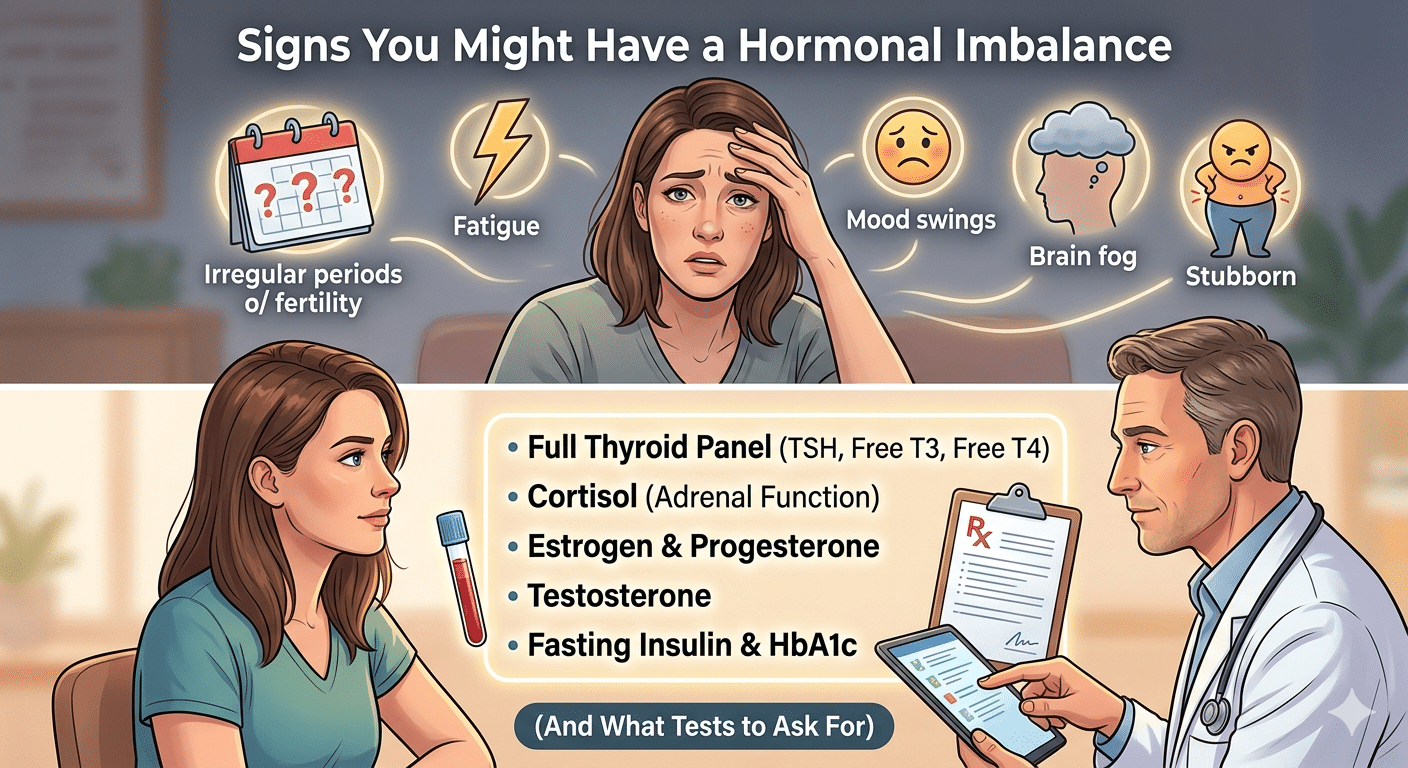
If you’ve been feeling out of sorts lately, it is easy to blame a lack of sleep, everyday stress, or just getting older. But sometimes, that persistent exhaustion or sudden mood shift is your body’s way of sending a distress signal. Your hormones—the tiny chemical messengers controlling everything from your metabolism to your mood—might be out of sync.
When your hormone levels are fluctuating too much, it can throw your whole system into chaos. Recognizing the signs of a potential hormonal imbalance is the first step toward feeling like yourself again.
Subtle Signs Your Hormones Might Be Out of Whack
Hormonal imbalances don’t look the same for everyone, but there are a few common red flags that suggest it’s time to pay closer attention to your body.
-
Unexplained, Persistent Fatigue: If you wake up exhausted after eight hours of sleep and rely entirely on caffeine to get through the day, your adrenal glands or thyroid might be struggling.
-
Stubborn Weight Changes: Gaining weight unexpectedly—especially around your midsection—or finding it impossible to lose weight despite a healthy diet and regular exercise can point to issues with insulin, cortisol, or thyroid hormones.
-
Mood Swings and Brain Fog: Feeling uncharacteristically anxious, irritable, or depressed can be tied to shifts in estrogen, progesterone, or testosterone. Brain fog, or struggling to focus, is another classic indicator.
-
Changes in Sleep Patterns: Struggling to fall asleep or waking up drenched in night sweats is often connected to a drop in progesterone or estrogen, or poorly regulated cortisol levels.
-
Skin and Hair Changes: Sudden adult acne, thinning hair, or unusually dry skin can all be driven by an imbalance in reproductive hormones or thyroid function.
What Medical Tests Should You Ask For?
If these symptoms sound a little too familiar, scheduling a visit with your primary doctor or an endocrinologist is an excellent next step. To get a clear picture of what’s happening beneath the surface, here are the key blood tests you can discuss at your appointment:
1. Full Thyroid Panel
Many standard physicals only check Thyroid-Stimulating Hormone (TSH). To get the complete picture of your thyroid health, ask for a comprehensive panel that includes Free T3, Free T4, and Thyroid Antibodies. This helps rule out conditions like hypothyroidism or Hashimoto’s.
2. Adrenal Function (Cortisol)
Cortisol is your primary stress hormone. A morning blood test or a 24-hour salivary test can evaluate whether your stress response system is overworking or depleted, which directly impacts your daily energy levels.
3. Reproductive Hormones
Depending on your biological sex and your specific symptoms, asking to check Estrogen (Estradiol), Progesterone, and Testosterone can explain a lot about mood swings, hair loss, and sleep disruptions.
4. Metabolic Markers (Insulin and HbA1c)
An Fasting Insulin test and an HbA1c test check how your body processes sugar. Insulin resistance can disrupt other hormones and is a frequent culprit behind stubborn weight gain and low energy.
Advocating for Your Health
The most important thing to remember is that you know your body best. If you feel like something is wrong, don’t hesitate to speak up, share your symptoms in detail, and request comprehensive testing. Armed with the right data, you and your doctor can create a personalized plan to bring your hormones back into a healthy, vibrant balance.