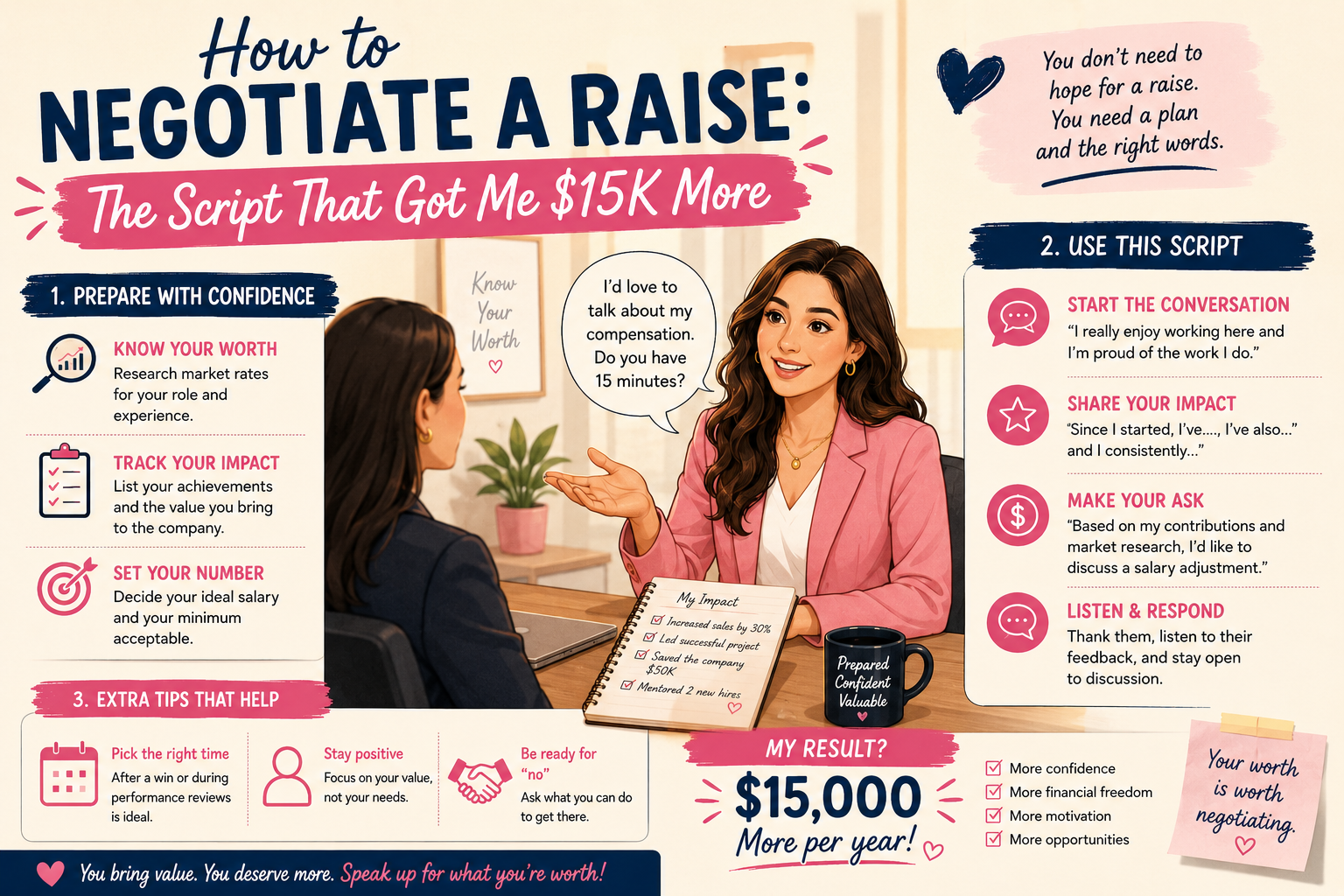
My hands were sweating so much I was worried I’d drop my coffee mug. It was 9:45 AM on a rainy Tuesday, and in fifteen minutes, I was scheduled to sit down with my manager for my annual review. For months, I had been doing the work of two people, staying late, and streamlining our entire client onboarding process. Yet, my salary didn’t reflect it.
I knew I deserved more, but the mere thought of asking for money made my stomach churn. I felt like a beggar asking for a favor.
Then, a mentor gave me a piece of advice that changed everything: “A salary negotiation isn’t an emotional plea. It’s a business transaction. Show them the data, speak their language, and use a script that removes the awkwardness.”
I spent the next three days practicing that script in front of my bathroom mirror. Fifteen minutes later, I walked into my boss’s office. By the end of the week, my annual salary was bumped by exactly $15,000. If you are feeling undervalued but terrified of the conversation, here is the storytelling framework and the exact script I used to get that raise.
The Strategic Groundwork Before the Script
You cannot walk into a negotiation room armed only with enthusiasm. Companies don’t give raises because you have bills to pay; they give raises because you provide measurable value.
Before my meeting, I built a “Brag Sheet.” This was a single-page document outlining my achievements over the past year. I quantified everything. Instead of writing “I helped with client onboarding,” I wrote “Redesigned the client onboarding pipeline, reducing setup time by 25% and increasing client retention by 12%.”
I also researched market data using sites like Glassdoor and Salary.com to ensure my target number ($15,000 above my current pay) was aligned with what competitors were paying for my exact role and experience level.
The Exact Script That Crushed the Tension
When I sat down with my manager, Sarah, we went through the standard review points. Once she finished praising my recent work, I took a deep breath and anchored the conversation using this exact three-step script.
Step 1: Establish Common Ground and Gratitude
“Sarah, thank you so much for the feedback. I’ve truly loved leading the team this past year and contributing to our project milestones. I’m incredibly proud of the fact that our new onboarding system saved the department over thirty hours of manual labor last quarter alone.”
Why it works: It starts on a positive, collaborative note. You are reminding them that you are on the same team and immediately anchoring their mind to your recent wins.
Step 2: Pitch the Market Reality
“Based on the expanded scope of my role over the past year—including managing the new vendor relationships—and taking a look at current market data for similar positions in our city, the standard compensation sits a bit higher than my current salary. To align my compensation with the value I’m delivering and the current market standard, I’d like to discuss adjusting my base salary to $85,000.”
Why it works: Notice I didn’t say, “I want a $15,000 raise.” Saying “$15k” sounds like a massive jump. Stating the total final number ($85,000) grounded in market data makes it sound professional and objective.
Step 3: The Power Move (Silence)
After I said my piece, I did the hardest thing imaginable: I stopped talking.
Why it works: Human beings naturally hate awkward silence and try to fill it. If you keep talking, you might start bargaining against yourself (“But we can negotiate if that’s too high!”). I let the silence sit for what felt like an eternity until Sarah spoke.
The Response and the Finish Line
Sarah didn’t say yes immediately. She nodded, looked at my Brag Sheet, and said, “You’ve done incredible work, but $15,000 is a big jump for our standard budget cycle. Let me talk to HR and see what we can do.”
Because I had provided concrete data, she had the ammunition she needed to advocate for me to upper management. Four days later, she called me into her office with an official offer letter reflecting the exact $15,000 bump.
Negotiating isn’t about being confrontational; it’s about having a structured conversation. Write down your wins, practice the script, embrace the silence, and go get what you are worth.