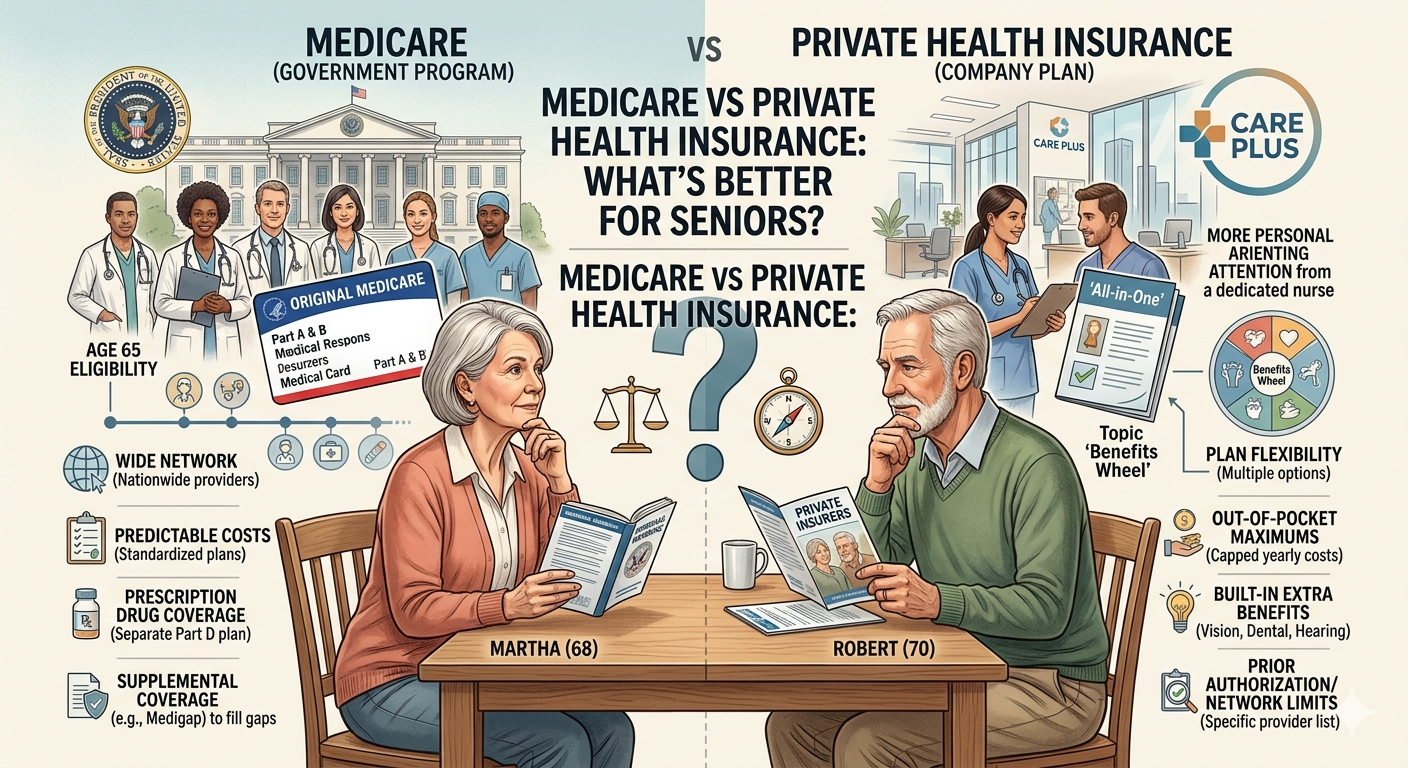
Health insurance is a crucial consideration for seniors, as it plays a significant role in ensuring access to necessary medical services and maintaining overall well-being. For older adults, navigating the complex landscape of health coverage can be particularly challenging, especially when it comes to understanding the nuances of Medicare versus private health insurance. Each option presents its own benefits and limitations, making it vital for seniors to conduct a thorough comparison to determine the best fit for their individual health care needs and financial situations.
Medicare, a federal health insurance program primarily designed for individuals aged 65 and older, provides a range of coverage options including hospital care, outpatient services, and preventive care. Seniors may also have the choice to enhance their Medicare coverage with additional plans, commonly known as Medicare Advantage plans, which often include broader services than traditional Medicare.
On the other hand, private health insurance offers an alternative for those who may prefer more flexibility in their choice of providers and benefits. With numerous plans available on the market, seniors can tailor their coverage to align closely with their specific health care needs. These private plans can vary significantly in terms of costs, coverage options, and provider networks, making it essential for seniors to carefully consider their choices.
In comparing Medicare and private health insurance, factors such as premium costs, coverage comprehensiveness, out-of-pocket expenses, and the availability of preferred healthcare providers come into play. As seniors seek to make informed decisions, understanding the fundamental differences between these two forms of health insurance coverage becomes essential. Engaging in this evaluation allows seniors to select an option that best addresses their unique health requirements and ensures they receive the quality healthcare services they deserve.
Understanding Medicare
Medicare is a federal health insurance program primarily designed for individuals aged 65 and older, although it also caters to younger individuals with disabilities or specific medical conditions. It comprises four distinct parts: Part A, Part B, Part C, and Part D, each serving a unique purpose within the overall framework of health care coverage for seniors.
Medicare Part A is generally referred to as hospital insurance. It covers inpatient hospital stays, skilled nursing facility care, rehabilitation, hospice, and some home health care services. Most seniors are entitled to enroll in Part A without paying a premium, owing to their prior contributions through payroll taxes during their working years.
Part B, on the other hand, is known as medical insurance. It encompasses a range of outpatient services, including doctor visits, preventive services, outpatient care, and certain home health services. Unlike Part A, Part B does require a monthly premium, which varies based on the beneficiary’s income.
Part C, commonly referred to as Medicare Advantage, is an alternative to the traditional Medicare plan that combines benefits from both Part A and Part B. These plans are offered by private insurers and often include additional coverage for services such as vision, dental, and hearing care, which are not part of the original Medicare program.
Lastly, Medicare Part D provides prescription drug coverage, which can significantly alleviate out-of-pocket costs for medications. Beneficiaries can enroll in a standalone drug plan or choose a Medicare Advantage plan that includes drug coverage.
Eligibility for Medicare typically begins at age 65, with individuals having the option to enroll during their initial enrollment period. It is crucial for seniors to understand the coverage details and associated costs, which can include premiums, deductibles, copayments, and coinsurance. While Medicare offers a solid base for health care needs, it does have limitations, particularly regarding long-term care and certain medical expenses, which may necessitate additional coverage options.
Exploring Private Health Insurance
Private health insurance offers individuals, including seniors, an alternative to Medicare by providing a range of plans and coverage options tailored to individual needs. Unlike Medicare, which is the federally funded program for eligible older adults, private health insurance is offered by various insurance companies and can include diverse policy structures.
When considering private health insurance, seniors can choose from several types of plans, including Health Maintenance Organizations (HMOs), Preferred Provider Organizations (PPOs), and Exclusive Provider Organizations (EPOs). Each type has its unique features; for instance, HMOs generally require members to use a network of doctors and get referrals for specialists, while PPOs allow more freedom to see any healthcare provider. This flexibility is one of the significant advantages of private insurance, as it provides options tailored to specific healthcare needs and preferences.
The coverage options can also vary considerably in private health insurance plans. Many policies provide options for additional services not covered by Medicare, such as dental, vision, and wellness programs. These additional benefits can enhance the overall healthcare experience and ensure that seniors receive comprehensive care.
Cost is another crucial factor when choosing private health insurance. Premiums can vary widely depending on the coverage level, deductible amounts, and out-of-pocket maximums. It is essential for seniors to assess their healthcare needs and evaluate the financial implications of different policies. Additionally, some private plans may require co-pays or co-insurance, impacting overall expenses.
Ultimately, seniors considering private health insurance must weigh the benefits, costs, flexibility, and their individual healthcare requirements. This careful evaluation will help in making an informed decision that best meets their health needs and financial situation.
Comparing Coverage Options
When it comes to healthcare for seniors, the choice between Medicare and private health insurance can significantly impact both health outcomes and financial stability. Understanding the differences in coverage options is crucial for making an informed decision. Medicare provides a range of healthcare services, including hospital stays under Part A, outpatient care through Part B, and various preventive services focused on wellness and early detection of diseases.
Under Medicare, hospital stays are largely covered, but beneficiaries should be aware that there are limitations. For instance, Medicare Part A typically covers inpatient care in hospitals during a medically necessary stay, but it requires the individual to meet a deductible, which can be a financial burden. On the other hand, outpatient services, which fall under Medicare Part B, include essential treatments like doctor visits and diagnostic tests. Medicare does cover some preventive services, such as screenings for certain cancers and vaccinations, which can enhance long-term health outcomes.
Private health insurance, however, often offers a more flexible and extensive array of coverage options. Many private plans provide additional benefits such as dental, vision, and hearing services, which are generally not covered by Medicare. Moreover, private insurers may have wider networks of healthcare providers, allowing for more choices concerning specialists and treatment facilities. Some private policies also include preventive care as part of their essential health benefits, similar to Medicare, but may provide enhanced coverage. This can potentially reduce out-of-pocket expenses for seniors seeking routine check-ups or preventive screenings.
In conclusion, while Medicare offers fundamental coverage suitable for many seniors, private health insurance can provide more flexibility and additional services that can cater to specific health needs. Understanding these differences can help seniors make empowered choices regarding their healthcare options.
Costs and Premiums
The financial aspects of healthcare are crucial for seniors navigating their options between Medicare and private health insurance. Understanding the costs associated with each can significantly influence decision-making, particularly in terms of premiums, deductibles, co-pays, and out-of-pocket maximums.
Medicare, a federal health insurance program, typically has lower premiums compared to private plans. For most seniors, Part A—covering hospital services—comes with no premium if they have paid Medicare taxes for a specified period during their working years. However, Part B, which covers outpatient services, does require a monthly premium, which increases annually. Additionally, Medicare does have deductibles and co-pays that can vary, with costs often determined by the services rendered.
On the other hand, private health insurance can come with varied costs depending on the plan selected, which can include higher premiums than Medicare. These premiums can be influenced by coverage specifics and the insurer’s network. Most private plans also include deductibles and co-pays, but these terms can be more flexible and tailored to an individual’s needs. Out-of-pocket maximums are an essential consideration, as they can provide financial protection against high medical expenses, though they can be higher than those seen with Medicare.
Moreover, it is worth noting that several financial aid options and programs, like Medicaid, are available for seniors with financial constraints. These programs can significantly ease the burden of healthcare costs, allowing seniors to select an appropriate insurance plan that aligns not only with their healthcare needs but also their financial situation.
Networks and Providers
Understanding network restrictions is pivotal when comparing Medicare and private health insurance, especially for seniors. Provider networks play a crucial role in determining the accessibility and quality of healthcare that policyholders receive. Generally, Medicare offers a more flexible approach when it comes to provider choice, as it does not typically require enrollees to confine themselves to a specific network. Seniors enrolled in Original Medicare can visit any doctor or hospital that accepts Medicare patients, providing them with broad access to healthcare services.
In contrast, private health insurance plans, particularly Health Maintenance Organizations (HMOs) and Preferred Provider Organizations (PPOs), often impose stricter network limitations. These plans may require members to select a primary care physician and obtain referrals to see specialists. Additionally, services received outside the network might not be fully covered, resulting in higher out-of-pocket expenses. This could restrict seniors’ choices and limit them to a smaller pool of providers within their area.
The significance of provider networks extends to the availability of local healthcare services. For seniors residing in rural areas, the number of network-approved providers can be limited, potentially hampering access to specialized medical care. Conversely, those who opt for Medicare Advantage plans find themselves in more structured networks but enjoy additional benefits, including wellness programs and capped out-of-pocket expenses.
In summary, the approach towards networks and providers is markedly different between Medicare and private health insurance. While Medicare offers greater flexibility in the choice of healthcare providers, private plans might provide more coordinated care within set networks. Understanding these distinctions is essential for seniors making informed decisions regarding their healthcare options.
Enrollment Periods and Eligibility
Understanding the enrollment periods and eligibility requirements for Medicare and private health insurance is crucial for seniors. Medicare, a federal health insurance program, primarily serves individuals aged 65 and older, as well as some younger individuals with disabilities. Generally, the initial enrollment period for Medicare starts three months before the individual turns 65 and extends for three months after their birthday month, providing a total of seven months to enroll.
Upon enrolling in Medicare, seniors may encounter different parts: Part A (hospital insurance), Part B (medical insurance), Part C (Medicare Advantage), and Part D (prescription drug coverage). It is essential to note that those who miss the initial enrollment period may face late enrollment penalties and must wait for the General Enrollment Period, which occurs annually from January 1 to March 31.
On the other hand, private health insurance plans offer varying enrollment periods that can differ by insurer. Many private plans also have annual enrollment periods, typically occurring during the fall, when seniors can review their options, switch plans, or enroll in a new one. Eligibility for private health insurance does not entirely depend on age, as these plans can be available to individuals under 65. However, seniors looking to purchase a private plan will often need to provide health assessments and may face higher premiums based on pre-existing conditions.
Seniors wishing to transition from Medicare to a private health insurance plan or vice versa must follow specific guidelines to ensure continued coverage. For example, those wishing to discontinue their Medicare plan should first consider the implications of missing out on essential benefits provided by Medicare, such as hospital insurance and preventive services. It’s advisable for seniors to consult a healthcare advisor to navigate the enrollment processes smoothly and avoid gaps in coverage.
Real-life Case Studies
Understanding the differences between Medicare and private health insurance can be enhanced by exploring real-life examples. These case studies illustrate the choices made by seniors based on their individual health conditions and financial circumstances, offering valuable insights into the effectiveness of each option.
Consider the case of Mr. Johnson, a retired school teacher in his late 70s who suffers from chronic diabetes and hypertension. After extensive research, Mr. Johnson opted for Medicare Supplement Insurance, also known as Medigap. This decision was primarily influenced by his need for regular specialist consultations and prescription medications. The Medigap policy complemented his Medicare coverage, enabling him to afford co-pays and deductibles associated with his treatments. As a result, Mr. Johnson reported a significant improvement in his overall health management, highlighting the ease of access to necessary healthcare services without the burden of exorbitant out-of-pocket expenses.
On the other hand, Mrs. Rodriguez, a 72-year-old widow who enjoys relatively good health, decided to go with a private health insurance plan. Her evaluation was based on her active lifestyle and the flexibility offered by the private plan, including a broader network of providers. Initially, this choice allowed her to engage in preventive services and routine check-ups, which she valued immensely. However, unforeseen medical needs arose when she was diagnosed with a non-life-threatening but expensive condition that required extensive treatment. The out-of-pocket maximum under her private insurance soon approached, posing financial consequences that she had not anticipated. This experience emphasizes the importance of thoroughly reviewing policy limits and coverage when considering private options.
These distinct cases underscore that the choice between Medicare and private health insurance is influenced by various factors, including health status, financial situation, and personal values. Each senior must assess their specific needs and constraints to determine which insurance type effectively supports their healthcare journey.
Conclusion and Recommendation
In evaluating the options between Medicare and private health insurance, it is imperative for seniors to consider a range of factors that will impact their overall well-being. Medicare provides foundational coverage that caters to a large portion of the senior population in the United States. With its various plan options, including Medicare Advantage and supplemental coverage options, it addresses many health-related needs. However, its structure may not cover all medical expenses, particularly in terms of specific providers and services.
In contrast, private health insurance offers an alternative that can possibly fill the gaps left by Medicare. Private plans often provide more flexibility in terms of provider choice and may include services that are not typically covered under Medicare. Nevertheless, these plans can come with higher premiums and out-of-pocket costs, making it essential for individuals to thoroughly evaluate their financial implications.
Ultimately, the decision between Medicare and private health insurance should be made based on an individual’s personal health needs, financial situation, and preferences. Seniors should reflect on their health status, the types of healthcare services they frequently use, and their budget when determining which plan best suits them. In some cases, a combination of both Medicare and private insurance might prove to be the most beneficial route, offering comprehensive coverage tailored to personal circumstances.
In summary, there is no universally correct answer as to whether Medicare or private health insurance is superior for seniors. Each option presents unique advantages and disadvantages. Therefore, it is strongly recommended that seniors engage in thorough research, perhaps consult with a financial advisor or healthcare professional, and carefully consider their own needs to arrive at a well-informed decision.