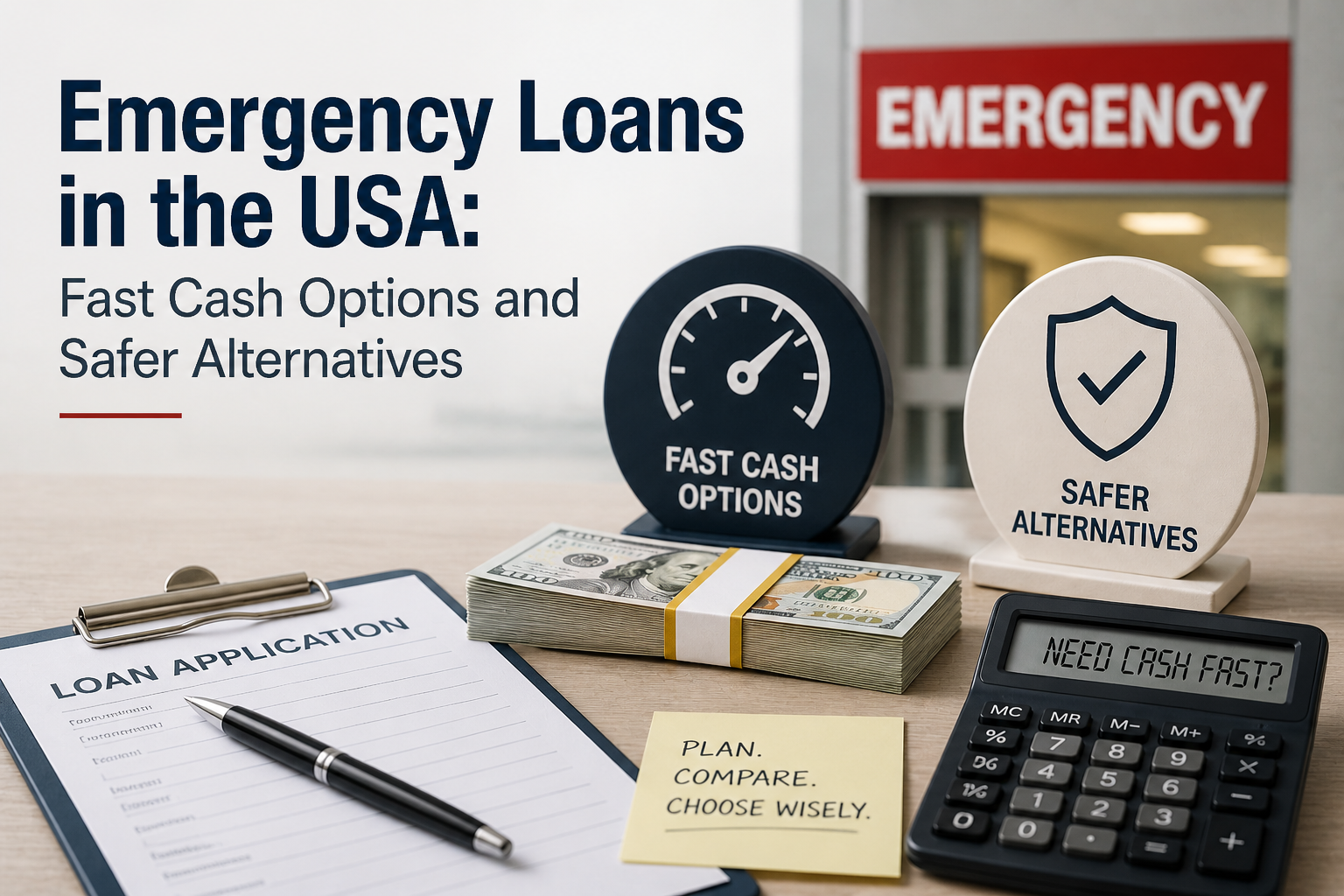
Emergency loans are a type of financial assistance designed to provide quick access to funds for individuals facing unexpected expenses. Unlike traditional loans, which often require lengthy application processes, strict credit checks, and prolonged approval times, emergency loans emphasize immediacy. This makes them an appealing option for those who need cash urgently, such as in cases of medical emergencies, car repairs, or unforeseen job loss.
The primary distinction between emergency loans and conventional loans lies in their speed and the conditions under which they can be accessed. Emergency loans can be secured with minimal documentation and often have more lenient credit requirements. They are structured to address immediate financial needs, allowing borrowers to receive funds within a short timeframe, potentially within one business day.
There are various scenarios where emergency loans may be necessary. For instance, a sudden medical bill not covered by insurance can result in immediate financial distress. Similarly, unexpected car repairs can hinder one’s ability to commute to work, necessitating swift financial solutions. Homeowners facing urgent repair needs, such as plumbing issues or roof leaks, may also find emergency loans beneficial. In these contexts, the urgency for financial support can be paramount, often outweighing the typical considerations one might have for other loan types.
It is important to note that while emergency loans offer quick relief, borrowers should approach them with caution. The ease of access can lead to potential pitfalls, such as high-interest rates and fees. Therefore, understanding the terms and being diligent in borrowing only what is truly necessary is vital. By doing so, individuals can navigate their financial challenges more effectively and responsibly.
Types of Emergency Loans
Emergency loans are a crucial financial resource for individuals faced with unexpected expenses or emergencies. In the USA, various types of emergency loans are available, each catering to specific needs and presenting distinct advantages and disadvantages. Understanding these types can help borrowers make informed decisions.
One common type of emergency loan is the payday loan. These are short-term loans typically due on the borrower’s next payday. While they provide quick access to cash, they often come with high interest rates and fees, making them a costly option if not repaid promptly. Payday loans are generally easy to obtain, requiring minimal credit checks; however, their high costs may lead to a cycle of debt.
Personal loans are another viable option. These loans can vary in amount and repayment terms, often having lower interest rates than payday loans. Personal loans can be used for various emergencies, such as medical bills or home repairs. They usually require a credit check, which can limit accessibility for those with poor credit. However, their longer repayment terms can ease the financial burden imposed on borrowers.
Title loans are secured loans where borrowers use their vehicle’s title as collateral. This type of loan can provide larger amounts of cash than payday loans, and borrowers with bad credit may still qualify. Nonetheless, the risk of losing one’s vehicle if unable to repay the loan can be a significant disadvantage.
Finally, cash advances, typically offered on credit cards, allow cardholders to withdraw cash up to a certain limit. While this option is convenient and fast, cash advances may incur high fees and interest rates from the outset, making them less favorable for long-term borrowing.
Each type of emergency loan presents its own set of pros and cons. Therefore, it is essential for borrowers to assess their financial situation and choose the option that aligns best with their needs.
How to Apply for an Emergency Loan
Applying for an emergency loan in the USA typically involves a straightforward process, though it can vary depending on the lender. Firstly, potential borrowers should assess their financial situation to determine how much they need. The application process generally begins with an online or in-person application form. Lenders require applicants to provide information such as personal identification, income details, and the reason for the loan.
Documentation is crucial when applying for an emergency loan. Key documents often include government-issued identification, such as a driver’s license or passport, proof of income like pay stubs or bank statements, and employment verification. Some lenders may also request additional information, such as your Social Security number or credit history. It is vital to have this documentation prepared in advance to ensure a smooth application process.
Eligibility criteria can vary significantly between lenders, but some common requirements include being at least 18 years old, having a steady income, and meeting certain credit score thresholds. Some lenders may be more flexible with credit score requirements, particularly for emergency loans, as they often cater to individuals facing financial urgencies.
Once the application is submitted, potential borrowers can expect a verification process where the lender assesses the provided information and documentation. This may involve a background check and a review of the borrower’s creditworthiness. Many lenders can provide a decision within a few hours to a few days, and upon approval, funds may be disbursed quickly, often within one business day. Understanding this process can help borrowers navigate the complexities of securing an emergency loan effectively.
Emergency loans can provide a quick financial solution for those facing unexpected expenses. One of the primary benefits of these loans is the speed at which funds can be accessed. In many cases, borrowers can receive approval and have money deposited into their accounts within a matter of hours or days. This rapid access to cash can be crucial in situations such as medical emergencies, car repairs, or urgent home repairs, where waiting to gather funds from alternative sources may not be an option.
However, the advantages of emergency loans are frequently counterbalanced by several significant drawbacks. One concern is the often exorbitant interest rates and fees associated with these loans. Lenders providing emergency cash options typically charge higher rates to mitigate risk, especially for individuals with less-than-perfect credit. This means that while the initial access to cash is quick, the long-term financial implications can lead to a heavier debt burden.
Moreover, the convenience of emergency loans can create a risk of falling into a cycle of debt. Borrowers may find themselves relying on these options repeatedly, leading to a situation where they are struggling to pay off previous loans while taking on new ones. That is especially concerning for individuals already facing financial difficulties. The risk of accumulating debt, combined with the potential high fees, can render these loans more harmful than beneficial in the long run.
Thus, while emergency loans can be a lifeline during unexpected financial crises, it is essential for borrowers to weigh the immediate benefits against the potential long-term consequences. Understanding the legal terms and reading the fine print before proceeding with such loans is crucial to making an informed decision.
Comparing Emergency Loans with Other Fast Cash Options
When faced with unexpected expenses, individuals often explore various fast cash options. Emergency loans, while convenient, are not the only route available. Borrowing from friends or family and utilizing credit cards are alternative methods, each possessing distinct advantages and disadvantages.
Emergency loans offer rapid access to funds, often within a single business day. They typically do not require collateral and are straightforward to apply for, making them desirable in urgent situations. However, they often come with higher interest rates compared to traditional loans, reflecting the risk lenders undertake. While the speed can be beneficial, borrowers should be cautious about their ability to repay the amount, as missed payments could lead to unfavorable consequences.
Another option is borrowing from friends or family. This method can offer flexibility regarding terms and repayment, as personal loans often come with lower interest rates—if any at all. Moreover, it generally allows for a more personalized agreement rather than a rigid structure set by financial institutions. However, this approach comes with its own set of complexities, such as potential strain on relationships and misunderstandings regarding payment timelines.
Credit cards also present a viable alternative for obtaining cash rapidly. Many credit cards allow users to take cash advances, which can provide immediate funds. However, this option generally incurs high interest rates and fees that can compound over time. Furthermore, relying on credit cards can lead to a cycle of debt if not managed correctly.
In contrast to emergency loans, both personal borrowing and credit cards might afford greater flexibility, but they may lack the speed required in truly urgent cases. It is crucial for individuals to evaluate their needs carefully, considering the implications of each option before proceeding.
Avoiding Predatory Lending Practices
In the realm of emergency loans, particularly for individuals facing urgent financial dilemmas, it is crucial to remain vigilant about potential predatory lending practices. Such practices can manifest in various forms, ultimately exploiting borrowers who may already be in distress. Predatory loans typically feature exorbitantly high interest rates, hidden fees, and aggressive repayment terms that can trap borrowers in a cycle of debt.
One of the primary indicators of a predatory lender is a lack of transparency regarding the terms and fees associated with the loan. Legitimate lenders provide clear, comprehensible documentation outlining all charges and stipulations. If a lender is unwilling to disclose information or uses complex jargon that makes understanding the loan nearly impossible, this is a significant red flag. Additionally, be wary of lenders who pressurize you to make hasty decisions or who do not allow you ample time to review the loan terms.
Another trait of predatory lenders is their focus on quality instead of a borrower’s capacity to repay the loan. Genuine lenders assess your financial situation comprehensively, whereas predatory lenders often prioritize quick approval without adequate evaluation. To safeguard oneself, it is advisable to verify the lender’s legitimacy through reliable sources, such as consumer protection websites or the Better Business Bureau.
Moreover, borrowers should remain suspicious of loans that require collateral or charge exorbitant penalties for late payments. A good practice includes comparing multiple lenders to gauge market standards and ensure that the terms offered are in line with typical loan agreements.
By staying knowledgeable about these warning signs and thoroughly examining any loan proposal, individuals can better protect themselves from falling victim to predatory lending and secure emergency funds responsibly.
Safer Alternatives to Emergency Loans
When faced with an urgent financial situation, many individuals consider emergency loans as a quick solution. However, this often leads to long-term debt due to high interest rates and unfavorable terms. Fortunately, there exist safer alternatives that can help mitigate this issue while providing financial stability.
One effective alternative is building a personal savings account, which serves as a financial cushion for unexpected expenses. Establishing an emergency fund, even if it starts small, can provide individuals with the necessary resources to handle emergencies without resorting to loans. Financial experts recommend saving at least three to six months’ worth of living expenses. This fund can be built progressively by setting aside a portion of your income each month, thereby ensuring that you have accessible cash when emergencies arise.
Another viable option to consider is approaching local credit unions. Unlike traditional banks, credit unions often offer more favorable terms, lower fees, and better interest rates on personal loans. Additionally, credit unions focus on serving their members, which fosters a community-driven environment. They often have specific programs that assist members facing financial distress, including low-interest loans and financial counseling services.
Community resources are also invaluable when searching for financial assistance. Many nonprofit organizations provide help with utility bills, rent assistance, or food security. These services can alleviate immediate financial burdens, enabling individuals to redirect their resources towards savings or other essential expenditures. Furthermore, local government programs may offer grants or emergency assistance funds designed to assist residents in need.
In conclusion, while emergency loans may appear to be a quick fix, exploring safer alternatives such as personal savings, credit union assistance, and community resources can lead to more sustainable financial health and peace of mind in times of crisis.
Tips for Managing Cash Flow During Emergencies
Financial emergencies often arise unexpectedly, placing immense pressure on individuals to find immediate solutions. To navigate such situations effectively, managing cash flow becomes imperative. Implementing designated budgeting techniques can assist in prioritizing essential expenses, ultimately reducing the reliance on emergency loans.
First and foremost, creating a detailed budget should be a priority. Begin by listing all sources of income and categorizing fixed and variable expenses. Fixed expenses include rent or mortgage, utility bills, and insurance payments, while variable expenses encompass groceries, entertainment, and discretionary spending. This clear overview of cash flow allows individuals to recognize areas where costs can be trimmed during tight financial periods.
Next, prioritize essential expenses. This entails covering the absolute necessities first, such as housing, food, and healthcare. By focusing on what is essential, individuals can make informed decisions about where to cut back. For instance, dining out or subscription services can be paused or eliminated until the financial situation stabilizes. Furthermore, consider exploring community resources like food banks or assistance programs. Many organizations provide support during financial hardships, alleviating some burdens and assisting in managing cash flow.
Another effective strategy involves building an emergency fund, if possible. While this may not be feasible during a financial crisis, allocating a small amount toward savings when circumstances allow can provide a safety net for future emergencies. Even a modest fund can mitigate the shock of unexpected expenses, reducing dependence on emergency loans.
Lastly, maintaining open communication with creditors can also be advantageous. If facing financial difficulties, reaching out to lenders to discuss payment options or temporary hardship plans may yield favorable results. Overall, these strategies not only aid in managing cash flow, but they can also empower individuals to navigate emergencies with greater confidence and less reliance on loans.
Conclusion: Making Informed Financial Decisions
In navigating the complexities of financial challenges, understanding emergency loans in the USA is crucial. These loans can provide rapid financial assistance during unexpected situations, enabling individuals to address urgent expenses. However, it is equally important to weigh the risks associated with such loans, including high interest rates and potential debt spirals. Therefore, exploring safer alternatives is essential in making sound financial decisions.
When faced with unforeseen circumstances that require immediate cash, individuals must consider their options carefully. While emergency loans may be tempting due to their quick access and minimal requirements, the implications of repayment can often lead to prolonged financial distress. Safer alternatives, such as credit unions, personal loans with favorable terms, or even community assistance programs, can offer more sustainable solutions. These options typically feature lower interest rates and manageable repayment plans, reducing the risk of falling into a cycle of debt.
Moreover, seeking advice from financial experts can further illuminate the risks and benefits associated with various borrowing methods. Evaluating one’s unique financial situation and understanding the terms and conditions of any loan products is imperative before committing to a financial decision. Clear understanding allows individuals to assess which option aligns with their financial goals and current capabilities.
Ultimately, making informed financial decisions is essential for long-term stability. By comprehensively understanding emergency loans and considering safer alternatives, individuals can better manage their finances and ensure a secure future. Knowledge is a powerful tool, and utilizing it wisely will empower individuals to make choices that foster their financial well-being.