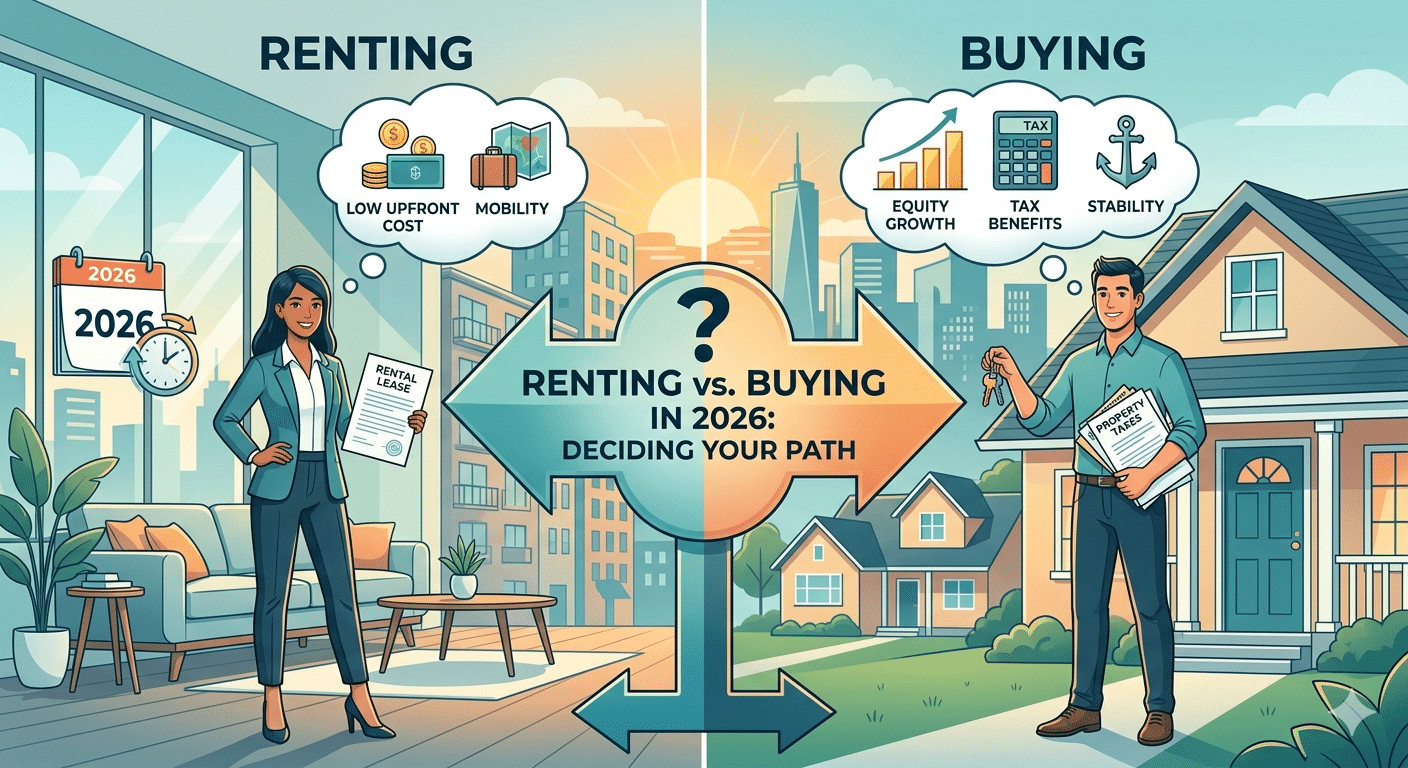
The age-old debate between renting and buying a home has never felt more complicated than it does in 2026. With mortgage rates having shifted dramatically over the past few years, rising home prices in many markets, and a rental landscape that looks nothing like it did a decade ago, the “right” answer depends heavily on your personal finances, lifestyle, and long-term goals. Here’s how to think it through.
The Financial Reality in 2026
Mortgage rates have stabilized compared to the highs of the early 2020s, but they remain elevated enough that monthly payments on a newly purchased home often exceed what renters pay for a comparable unit — at least in the short term. In many urban markets, the price-to-rent ratio still favors renting from a pure cash-flow perspective.
That said, homeownership continues to build equity over time. Every mortgage payment chips away at your principal, and in markets with steady appreciation, that can translate to significant long-term wealth. The question isn’t just what you pay today — it’s what your housing dollar is doing for your future.
Key financial factors to compare:
- Your local price-to-rent ratio (divide median home price by annual rent for a similar property; above 20 generally favors renting)
- How long you plan to stay (buying typically breaks even after 5–7 years)
- Your down payment size and its opportunity cost
- Property taxes, HOA fees, insurance, and maintenance costs (budget 1–2% of home value annually)
When Renting Makes More Sense
Renting isn’t throwing money away — it’s paying for flexibility, predictability, and freedom from maintenance headaches. In 2026, renting makes particular sense if:
- You’re uncertain about your location. Remote work has made job mobility more common. If there’s any chance you’ll relocate in the next three years, renting keeps your options open.
- Your market is overvalued. Some metros are still experiencing inflated home prices. Renting while waiting for a correction can protect your capital.
- Your savings aren’t quite there. A thin down payment means a larger loan, higher monthly costs, and private mortgage insurance (PMI). Renting while you save more can put you in a much stronger buying position later.
- You value low commitment. Homeownership comes with responsibility — repairs, upkeep, and the administrative weight of property ownership. For some people, especially in transitional life stages, that trade-off simply isn’t worth it.
When Buying Makes More Sense
Despite the financial hurdles, buying still makes compelling sense for the right person in the right market. Consider buying if:
- You plan to stay put. If you’re settled in a city and community you love, buying locks in your housing cost and starts building equity immediately.
- Your market favors ownership. Smaller cities, suburban areas, and regions with strong job growth often have price-to-rent ratios well below 15 — a strong signal that buying is the smarter long-term play.
- You want stability and control. Owning your home means no surprise rent hikes, no landlord restrictions, and the freedom to renovate and personalize your space.
- You’re financially ready. A solid down payment (ideally 20%), a healthy emergency fund, manageable debt levels, and a good credit score put you in an excellent position to handle the true costs of homeownership.
The Bottom Line
There is no universal right answer to the renting vs. buying question in 2026. The smartest move is the one that aligns with your timeline, financial health, and personal priorities. Run the numbers for your specific market, be honest about your life plans, and resist pressure to buy simply because it’s seen as the “adult” thing to do.
Renting strategically and buying intentionally are both valid paths to financial stability. The key is making the choice on your own terms — not society’s timeline.