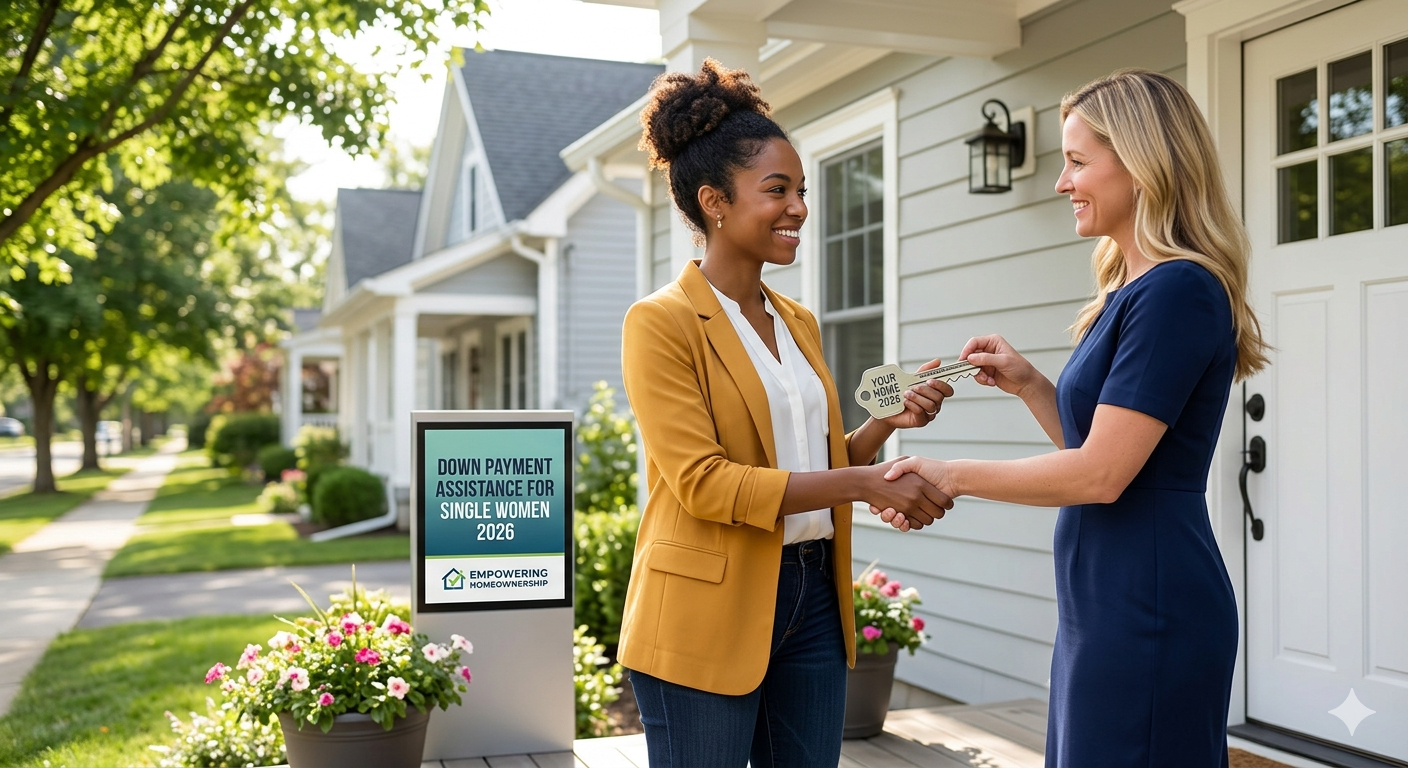
Buying a home is a monumental milestone, but for single women, saving for a down payment can feel like a steep uphill climb. Recent studies highlight that rising housing costs, economic insecurity, and stubborn gender wage gaps make entering the real estate market uniquely challenging for female-headed households (Zewale, 2026).
However, being a single buyer does not mean navigating the market alone. In 2026, a wide range of down payment assistance (DPA) programs, grants, and specialized loans are available to help single women bridge the financial gap and unlock the door to homeownership.
1. Government-Backed First-Time Homebuyer Programs
Federal and state governments provide excellent entry points for single women buying a home, especially if they are first-time buyers.
-
FHA Loans: Backed by the Federal Housing Administration, these loans require a down payment of just 3.5% for borrowers with a credit score of 580 or higher.
-
USDA Loans: If you are looking to buy in a qualified suburban or rural area, the U.S. Department of Department of Agriculture offers 100% financing (zero down payment) for low-to-moderate-income buyers.
-
VA Loans: For single women who are active-duty service members, veterans, or eligible surviving spouses, the Department of Veterans Affairs provides zero-down-payment loans with no private mortgage insurance (PMI) requirements.
2. State and Local Down Payment Assistance (DPA) Grants
The most powerful tools for single women in 2026 are local and state-level DPA programs, typically managed by State Housing Finance Agencies (HFAs). These programs do not strictly exclude men, but they are heavily utilized by single mothers and solo female buyers due to income-targeting guidelines.
DPA generally comes in three forms:
-
Forbearance Grants: Free money that does not have to be paid back, provided you live in the home for a specific number of years.
-
Soft Second Mortgages: A second loan used for the down payment that features 0% interest and deferred payments until you sell or refinance the home.
-
Matched Savings Programs: Also known as Individual Development Accounts (IDAs), these programs match every dollar you save for a down payment with three or four dollars in grant funding.
3. Dedicated Programs for Diverse and Single Communities
Private and non-profit sectors are actively working to shrink equity gaps in homeownership. Major banking initiatives, such as the Wells Fargo Wealth Opportunities Realized through Homeownership (WORTH) initiative, fund local collaboratives to expand access to credit and boost down payment assistance specifically within communities of color and underserved demographics (Scally, 2024).
Additionally, community organizations often provide targeted micro-grants for single mothers, working mothers, and women transitioning into independent housing.
Key Qualifications Checklist for 2026
To qualify for the majority of down payment assistance programs, single women will typically need to meet the following parameters:
| Criteria | Typical Requirement |
| First-Time Buyer Status | Cannot have owned a primary residence in the past 3 years. |
| Income Limits | Household income usually must be under 80% to 120% of the Area Median Income (AMI). |
| Credit Score | Most programs require a minimum credit score between 620 and 640. |
| Homebuyer Education | Completion of a certified homeownership counseling course is mandatory. |
Your Next Steps to Homeownership