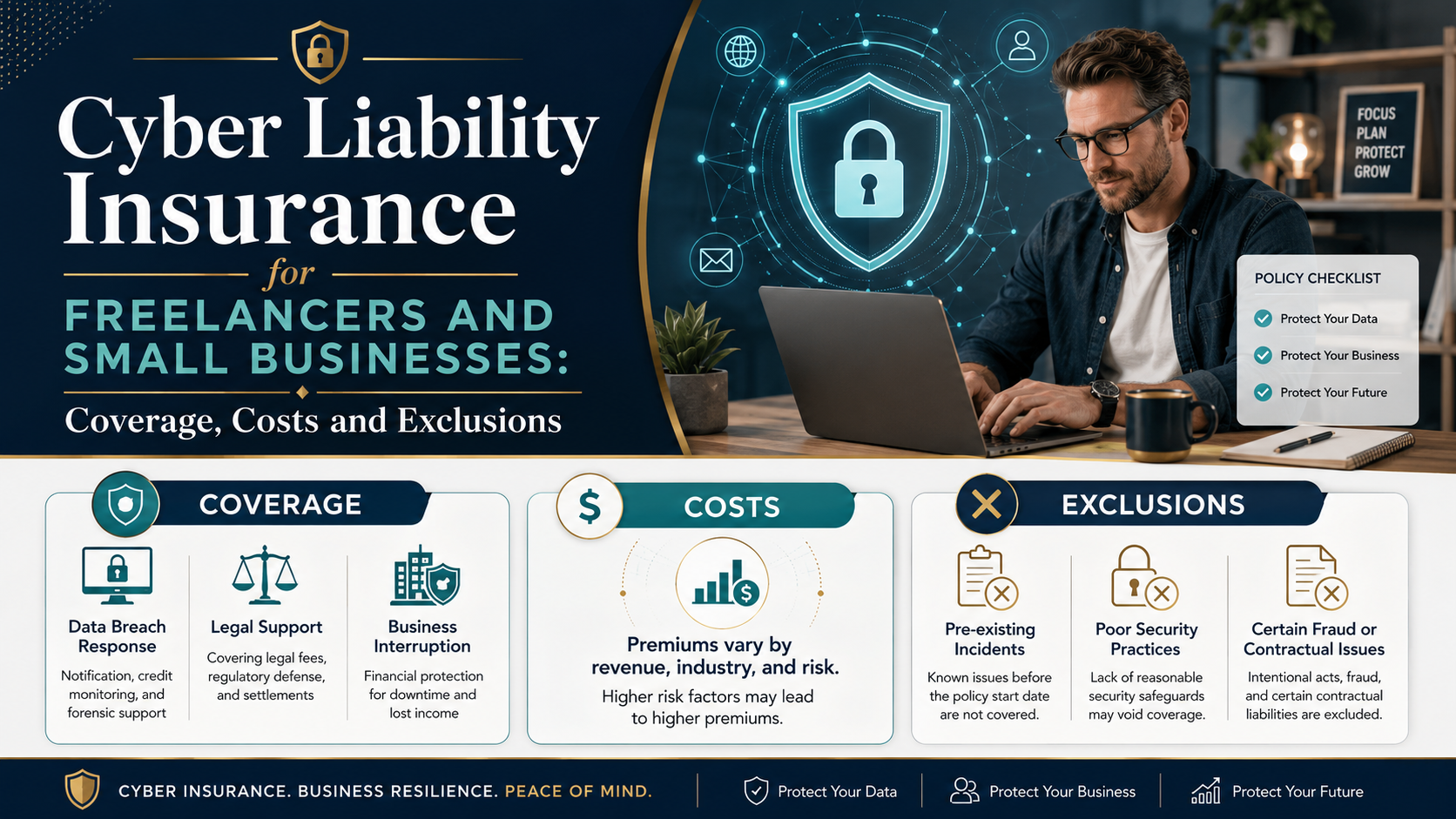
Cyber Liability Insurance for Freelancers and Small Businesses: Coverage, Costs, and Exclusions Explained
By Jasmine Watts
Understanding the intricacies of cyber liability insurance is crucial for freelancers and small businesses navigating today’s digital landscape. This specialized insurance protects against a range of online threats, from data breaches to cyberattacks, ensuring that businesses can respond effectively to incidents without facing crippling costs. This comprehensive guide will delve into the types of coverage available, the costs associated with insurance policies, common exclusions, and how to file a claim. Whether you’re a freelancer or a small business owner, learning about cyber insurance coverage can shield your operations from significant financial risk.
In this article, we will explore five main areas: what cyber liability insurance covers, the costs of obtaining such coverage, the typical exclusions found in policies, how to file a claim, and the effects of cybersecurity regulations on your insurance options. By the end, you’ll gain a detailed understanding of how this insurance can safeguard your business against the ever-increasing risks of the digital world.
What Does Cyber Liability Insurance Cover for Freelancers and Small Businesses?
Cyber liability insurance encompasses several types of coverage specifically tailored to protect freelancers and small businesses against various online threats. These policies are designed to mitigate losses resulting from data breaches, business interruptions, and other cyber-related incidents. By facilitating a robust response to security breaches, this insurance assists in safeguarding both business assets and client trust.
Which Coverage Types Protect Against Data Breaches and Network Threats?
Different coverage types play a vital role in addressing the risks associated with data breaches and network threats. Key coverage types often include:
- Data Breach Response Costs: This coverage addresses expenses incurred during a data breach, such as notification costs, identity theft protection for affected clients, and legal fees.
- Regulatory Fines: Many policies cover fines imposed by regulatory bodies following a data breach, helping to mitigate the financial impact on the business.
- Business Interruption: Coverage for lost income due to an interruption in business operations resulting from cyberattacks ensures that freelancers and small businesses can maintain financial stability during recovery periods.
These coverage types are designed to handle incidents promptly, preserving business continuity and reducing reputational damage.
Cyber Liability Coverage: Ancillary Services and Data Breach Impact
include ancillary cover for such elements as Cyber Extortion or costs associated with PR. The impact of a data breach can be far reaching but Cyber liability coverage essentially falls The rise of cyber liability insurance, 2014
How Does Coverage Address Privacy Liability and Cyberattack Risks?
Coverage also extends to privacy liability and the potential risks stemming from cyberattacks. Privacy liability coverage defends businesses against legal claims made by clients due to breaches of their personal data. This aspect is particularly relevant for freelancers and small businesses handling sensitive customer information.
For instance, if a freelancer’s system is compromised, revealing client data, this type of coverage can effectively cover the legal costs and settlements arising from lawsuits related to such incidents. Similarly, businesses employ measures under their policies to ensure that they can respond appropriately to the various risks posed by cyberattacks, support recovery efforts, and address customer concerns regarding privacy.
How Much Does Cyber Insurance Cost for Freelancers and Small Businesses?
The cost of cyber liability insurance can vary widely based on several factors. Understanding these cost factors can help businesses obtain affordable yet comprehensive coverage tailored to their specific needs.
What Factors Influence Cyber Insurance Premiums and Deductibles?
Several critical factors influence the premiums and deductibles associated with cyber insurance policies:
- Business Type and Size: The nature of the business and the volume of data handled can substantially affect premium rates. For example, businesses with a higher risk of data exposure may face increased costs.
- Industry Risk Factors: Certain industries, such as healthcare or finance, are deemed higher risk due to the sensitive data involved, leading to higher premiums.
- Existing Security Measures: Companies that demonstrate strong cybersecurity protocols and practices may benefit from lower premiums, as they are perceived to pose a lower risk to insurers.
These factors contribute to how cyber insurance policies are structured, covering various aspects and setting rate schedules.
Understanding Cyber Insurance Policy Components: Coverage, Applications, and Rates
main components of cyber insurance policies: coverage, applications, and rate schedules. In insurance lines, “the Limit of Liability factors are taken from our Miscellaneous Professional Content analysis of cyber insurance policies: How do carriers write policies and price cyber risk?, 2017
What Are Typical Cost Ranges for Small Business Cyber Liability Policies?
Typical costs for cyber liability insurance can range significantly, making it essential for small businesses to assess their policies carefully. Generally, small businesses can expect to pay:
- Average annual premiums: $1,000 to $7,500 depending on coverage amounts and business types.
- Typical deductibles: Ranging from $500 to $10,000, depending on the policy specifics.
This cost structure indicates that while premiums remain manageable for many freelancers and small businesses, the risk exposure still underscores the importance of adequate protection.
Despite these ranges, small businesses often face unique challenges in securing appropriate coverage due to how risk is quantified.
Cyber Insurance Challenges for Small Businesses: Risk Scoring and Premiums
The cyber insurance sector faces an existential crisis driven by premium optimization and quantifying cyber risk in financial model disproportionately scores small businesses (SMEs) AI-Powered Risk Scorecards and the Algorithmic Transformation of Cyber Insurance Underwriting: A Critical Examination of Continuous Optimization, Systemic …, 2025
What Are Common Cyber Liability Policy Exclusions and Why Do They Matter?
While cyber liability insurance provides critical protection, it is equally essential to recognize common exclusions that may restrict coverage. Understanding these exclusions can help policyholders avoid misunderstandings during the claims process.
Which Exclusions Impact Coverage for Social Engineering and Insider Threats?
Many policies exclude coverage for losses resulting from social engineering attacks, where an employee is tricked into providing sensitive information. Additionally, insider threats posed by employees or partners may not be fully covered, emphasizing the need for organizations to implement comprehensive security awareness programs.
Understanding these exclusions is essential, as they effectively determine the boundaries of coverage and the potential gaps that could leave businesses vulnerable during a security incident.
How Do Pre-Existing Incidents and Other Gaps Affect Claims Eligibility?
Another common exclusion involves pre-existing incidents that can impact claims. If a business had a prior data breach or incident and did not disclose it during the application process, insurers may deny claims associated with new breaches. This situation underscores the importance of maintaining transparency when applying for coverage, as undisclosed information can lead to coverage denials when it is most needed.
How Do Freelancers and Small Businesses File a Cyber Liability Insurance Claim?
Filing a cyber liability insurance claim can be critical in recovering from cyber incidents. Understanding the process can ensure that businesses act swiftly and effectively to mitigate losses.
What Is the Step-by-Step Process for Submitting a Cyber Insurance Claim?
The process for submitting a claim typically involves several key steps:
- Incident Investigation: Promptly investigate the breach to understand the scope and extent of the damage.
- Notification: Contact the insurance provider to report the incident and initiate the claims process.
- Document Collection: Gather all necessary documentation, including evidence of the breach, communications, and associated costs for claim submission.
Following these steps closely can enhance the likelihood of a successful claim submission.
What Documentation and Evidence Are Needed to Support a Claim?
Supporting a claim requires comprehensive documentation, which may include:
- Police reports of incidents.
- Evidence of affected clients, including communication records.
- Invoices related to data recovery and breach response activities.
Providing detailed evidence aligns with the expectations of insurers and bolsters the claimant’s position during the review process.
How Do Cybersecurity Regulations and Risk Management Affect Insurance Coverage?
Cybersecurity regulations play a crucial role in shaping the landscape of insurance requirements for businesses. Adherence to these regulations can influence coverage availability and terms.
Which Data Protection Laws Influence Cyber Liability Policy Requirements?
Various data protection laws, such as the and the , necessitate rigorous compliance standards. Insurers may require proof of compliance before approving coverage or providing favorable terms, thus making regulatory awareness a critical aspect of managing insurance relationships.
What Best Practices Help Small Businesses Mitigate Cyber Risks Effectively?
To mitigate cyber risks, small businesses should implement best practices, including:
- Regular Security Training: Ensure employees understand potential threats and how to respond appropriately.
- Up-to-Date Software: Regularly update software to protect against known vulnerabilities.
- Incident Response Plan: Develop and maintain an incident response plan to outline procedures for addressing breaches.
Implementing these practices not only enhances security but can also positively influence insurance premiums and coverage eligibility.
The landscape of cyber liability insurance continues to evolve as the digital threat environment changes. By understanding coverage options, costs, exclusions, and filing procedures, freelancers and small businesses can better prepare themselves against the risks associated with operating in a digitally connected world.