
The ESG Investment Boom in America: Trend or Long-Term Strategy?
Introduction: ESG Investing at a Crossroads
In early 2026, ESG investing—where investment decisions account for environmental, social, and corporate governance factors—is at a pivotal moment. On one hand, sustained demand from younger investors, regulatory alignment, and climate imperatives suggest a durable shift. On the other, political backlash, rising scrutiny, and mixed financial outcomes raise questions about whether today’s ESG boom is a fleeting trend or a lasting paradigm shift.
1. Growth Momentum: Market Size & Driving Forces
✅ Surging Market Size
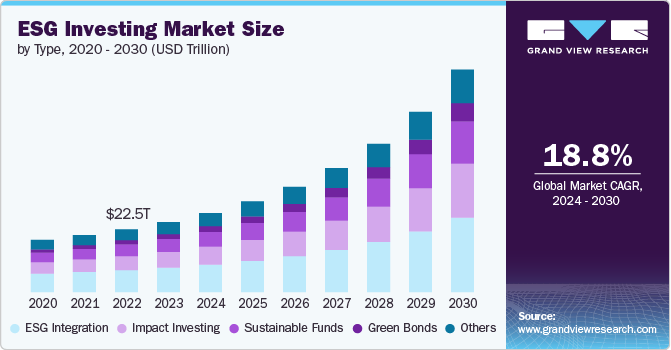
- The U.S. ESG investing market stood at approximately USD 7.9 billion in 2024, and is projected to grow at a CAGR of ~17–19% from 2026 to 2030, reaching roughly USD 16–20 billion or more depending on segmentation—some forecasts even place U.S. ESG assets at over $44 trillion by 2034
- Globally, sustainable fund assets reached about USD 3.16 trillion by March 2026, even amid net flows downward in Q1
🔍 What’s Driving Demand?
- Millennial and Gen‑Z Preferences: In the U.S., around 70–85% of younger investors prefer ESG-aligned investments, with 60% planning to boost their allocation to ESG funds in the next year
- Regulation & Disclosure Pressures: The EU’s Corporate Sustainability Reporting Directive (CSRD) and UK’s SDR pushed firms toward ESG transparency. In the U.S., roughly 30% of S&P 500 companies now voluntarily align with ISSB reporting standards
- AI and Data Analytics: ESG analysis is increasingly powered by artificial intelligence—allowing rapid screening, enhanced transparency, and deeper risk insights. One report indicates 40% of ESG funds now leverage AI tools with predictive models showing up to 85% accuracy in climate risk assessment
2. Challenges & Skepticism: Is ESG Delivering?
💸 Returns and Efficacy
- A new study from Scientific Beta (SGX Group) found ESG-optimized portfolios over the past 15 years delivered no meaningful risk-adjusted returns advantage over traditional strategies—and occasionally led to poor exposures or underperformance
- Critics argue much ESG data simply duplicates financial signals, raising costs without enhancing predictive power .
🏛️ Political and Regulatory Backlash
- Under the Trump–Vance administration, shareholder support for environmental and social resolutions fell sharply—from around 32% to just 16% average support in 12 months ending June 2026
- ESG efforts have become politically charged, leading some asset managers (e.g. T. Rowe Price) and proxy advisory services (ISS, Glass Lewis) to reduce ESG-related pushes, despite many reforms already adopted
- Global divergence is widening: while Europe remains committed to ESG frameworks, the U.S. retreat creates a regulatory gap and strategic uncertainty .
⚠️ Greenwashing & Disclosure Quality
- Increased regulatory scrutiny (SEC, EU, UK regulators) highlights greenwashing risks, pushing funds to clarify claims or withdraw ESG labeling entirely if claims can’t be substantiated .
- Market participants emphasize the rise of “greenhushing”—companies quietly following ESG goals without overt marketing—to avoid political backlash while still maintaining ESG commitments Investing.com.
3. Is ESG a Fad or Strategic Shift?
✅ Indicators of a Lasting Strategy
- Long-Term Institutional Commitment: Over 5,000 institutional signatories, representing more than $128 trillion in managed assets, have adhered to the UN Principles for Responsible Investment (PRI), reflecting deep-rooted intent to integrate ESG strategies over time .
- Resilience Metrics: Long-term comparisons indicate sustainable funds slightly outperformed traditional counterparts (e.g., growth from $100 to $136 vs. $131 since 2018) .
- Climate Adaptation Focus: Beyond emissions reductions, ESG now includes resilience and adaptation—think climate risk analytics, infrastructure resilience, water management and sustainable agriculture. These areas represent trillion-dollar investment niches and growing private capital opportunities .
⚠️ Signs of ESG Fragility
- Political Volatility: ESG’s future in the U.S. hinges on shifting policy landscapes. With reversals from previous climate-focused frameworks, the ESG narrative is more uncertain .
- Market Performance Doubts: Mixed academic findings on ESG returns raise concerns—some investors prioritizing values may accept trade-offs, but expectations of financial outperformance may be unrealistic .
- Regulatory Complexity: Diverging state mandates, EU-US rule differences, and disclosure requirements create a confusing operating backdrop for global investors and corporates alike .
4. Investor Strategies: Navigating ESG With Intent
🎯 Approach #1: Core ESG Integration
- ESG integration remains the most prevalent strategy (~81% of investors)—combining ESG factors with traditional financial analysis to inform, but not dictate, portfolio decisions .
- Low-cost ESG ETFs and index funds are proliferating, giving retail investors accessible exposure—though investors must ensure anti-greenwashing measures and transparency. Passive ESG funds are growing fastest, but offer less control over outcomes.
🎯 Approach #2: Thematic & Impact Investing
- Targeted funds focusing on clean energy, water resilience, sustainable agriculture, or social inclusion allow investors to align capital with measurable outcomes and sustainability themes .
- Impact investing—capital deployed for measurable social/environmental benefit alongside financial return—is expected to expand rapidly, with sustainable finance projected to evolve from ~$754 billion in 2024 to ~$2.6 trillion by 2030 .
🎯 Approach #3: Due Diligence & Diversification
- Investors should conduct stringent due diligence: scrutiny of ESG scoring methodology, firm disclosures, underlying company policies, and track record.
- Diversify across regions (U.S., Europe, Asia), strategies (active vs passive, integration vs thematic), and sectors (energy, tech, consumer) to mitigate political, regulatory, and performance risk .
🎯 Approach #4: Technology Leveraging
- Leveraging AI tools for ESG analysis can reduce cost and complexity while improving insight—though investors must weigh the environmental footprint of AI infrastructure itself and validate model robustness .
5. Future Outlook: Where ESG May Head
🌍 Global vs U.S. Dichotomy
- Europe and Asia continue to lead in clear ESG regulation and sustainable finance infrastructure. The U.S. market remains large but politically polarized—meaning investor alignment may vary by state and sector .
🧭 ESG as Resilience Framework
- The shift from sustainability to “resilience investing”—investing in climate adaptation assets like resilient infrastructure, flood mitigation, water management—is steadily gaining traction across institutional and public sectors .
- Private capital is increasingly flowing into adaptation technologies, representing areas of growth with measurable impact and return potential.
⚖️ Impact on Returns and Strategy
- Firm evidence indicates ESG-integrated approaches tend to match traditional portfolios, occasionally slightly beat them over long horizons—especially in sectors where governance or climate risk materially affects performance .
- ESG investing will likely persist—but evolve into more targeted, regulated, and data-driven forms rather than broad-brush passive offerings.
6. Conclusion: Trend or Long-Term Strategy?
Yes—it’s evolving into a long-term strategic shift, not just a passing trend. ESG investing, anchored in regulatory momentum, generational preferences, climate imperatives, and improved data tools (especially AI), is reshaping how capital flows. But there are still pitfalls:
- Political headwinds and regulatory rollbacks in the U.S. could create volatility and fragmentation.
- Performance skepticism and greenwashing concerns underscore the need for critical vetting.
- Global divergence means U.S. ESG investors need broader, diversified exposure beyond domestic markets.
Savvy ESG investors can benefit by:
- Integrating ESG factors where they impact risk or opportunity,
- Using thematic and impact mandates for targeted exposure,
- Applying rigorous due diligence and avoiding passive or opaque funds,
- Diversifying across regions, strategies, and asset types,
- Leveraging AI and data platforms—but monitoring for model bias or hidden costs.
Ultimately, resilience-focused investing—rooted in adaptation, governance, climate risk mitigation, and social inclusion—may offer the most durable path forward.
📌 Key Takeaways
- The U.S. ESG market has grown dramatically and shows strong future trajectory—but global leadership now lies in Europe and Asia.
- Younger generations are driving demand, while institutional signatories and regulatory shifts validate long-term momentum.
- Academic and market research challenges the notion of guaranteed premium returns from ESG—but long-term risk reduction and values alignment remain potent drivers.
- ESG is transitioning to resilience and climate adaptation investing, with emerging sub-industries poised for growth.
- Thoughtful investors align capital with impact and return—but remain vigilant to policy changes, exposure risks, and data transparency.