

Growth Investing vs. Value Investing in the Current U.S. Market (2026)
In the ever-evolving landscape of the U.S. stock market, one debate remains timeless:
Growth investing vs. value investing—what’s the better strategy in 2026?
With markets stabilizing post-inflation, AI-driven innovation booming, and interest rates peaking, investors are reevaluating where their money works hardest. Should you chase high-flying tech stocks riding the AI wave or stick to reliable, undervalued names with strong fundamentals?
This article explores the key differences between growth and value investing, compares how each strategy is performing in 2026, and offers insights into how investors should position their portfolios in today’s market.
Growth vs. Value: What’s the Difference?
| Criteria | Growth Investing | Value Investing |
|---|---|---|
| Goal | Capital appreciation | Buy undervalued stocks |
| Focus | High earnings/revenue growth | Low valuation relative to fundamentals |
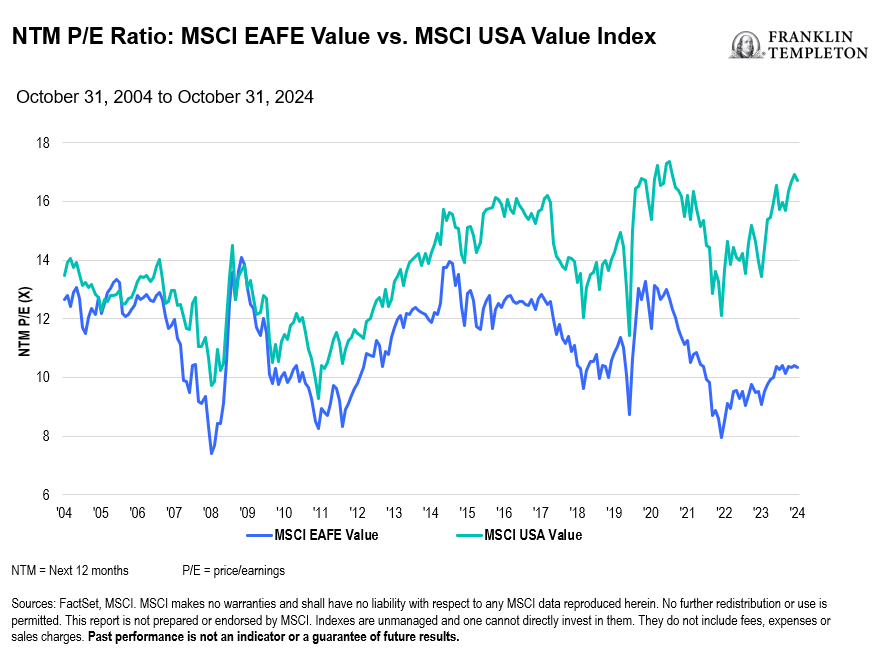
| P/E Ratios | High (30–50+) | Low (10–20) |
| Dividends | Rare | More common |
| Common Sectors | Tech, biotech, EV, SaaS | Financials, energy, consumer staples |
| Risk Level | High | Moderate to low |
| Holding Period | Long-term, trend-driven | Long-term, mean-reversion-focused |
What Is Growth Investing?
Growth investors seek companies with the potential to grow faster than the broader market—often through innovation, disruption, or expanding market share.
Characteristics of Growth Stocks:
- High revenue and earnings growth rates
- Often reinvest profits (little to no dividends)
- Operate in emerging or fast-evolving industries
- Strong brand presence and scalability
Examples in 2026:
- Nvidia (NVDA) – AI and semiconductors
- Palantir Technologies (PLTR) – AI-powered big data
- Tesla (TSLA) – EVs, solar, and autonomous driving
- Snowflake (SNOW) – Data cloud platforms
- CrowdStrike (CRWD) – Cybersecurity
What Is Value Investing?
Value investors look for stocks trading below their intrinsic value. These companies may be out of favor due to short-term issues but possess strong long-term fundamentals.
Characteristics of Value Stocks:
- Lower P/E and P/B ratios
- Strong cash flow and dividends
- Established industries with steady earnings
- Often overlooked by momentum traders
Examples in 2026:
- Berkshire Hathaway (BRK.B) – Conglomerate of undervalued assets
- Pfizer (PFE) – Pharma giant with low multiples
- Bank of America (BAC) – Financial sector rebound
- Coca-Cola (KO) – Stable consumer brand
- Intel (INTC) – Repositioning in semiconductor space
2026 Market Snapshot: Which Style Is Winning?
Growth Stocks Rebound Strongly
After a turbulent 2022–2023 period due to rate hikes, growth stocks made a powerful comeback in late 2024 and early 2026. Why?
- AI Boom: Companies like Nvidia and Microsoft are dominating earnings headlines.
- Fed Pause: With interest rates stabilizing, future earnings are being rewarded again.
- Earnings Momentum: Tech and SaaS companies are posting double-digit YoY revenue growth.
Nasdaq-100 is up nearly 18% YTD as of July 2026, outperforming the S&P 500.
Value Stocks Show Stability, But Underperform
Value stocks provided cushion during the downturn—but they’re now lagging growth in a recovering environment.
- Financials and energy are stable but not expanding aggressively.
- Consumer staples and utilities offer dividends but little upside.
- Many value names are near fair value, limiting re-rating potential.
Value ETFs like VTV (Vanguard Value ETF) are up about 6–8% YTD, but trail growth-focused ETFs like QQQ or ARKK.
Which Strategy Makes Sense Now?
Let’s assess when to favor each strategy in light of today’s macro environment:
Choose Growth If:
- You believe AI, biotech, and green energy are secular trends (not hype).
- You have a 5+ year time horizon and can weather volatility.
- You’re focused on capital gains over income.
- You’re investing in innovation-driven sectors.
Choose Value If:
- You want stable dividends and lower portfolio volatility.
- You are nearing retirement or need income-oriented assets.
- You prefer traditional industries (e.g., banks, pharma, infrastructure).
- You’re cautious about high P/E valuations and potential corrections.
What Top Investors and Analysts Say
Warren Buffett (Value Icon):
Buffett continues to back value strategies but has also added Apple and Amazon—blurring the lines.
Cathie Wood (Growth Advocate):
ARK Invest predicts exponential returns from AI, genomics, and robotics over the next decade.
Analyst Insights:
- Goldman Sachs: Overweights large-cap tech and AI-related growth stocks.
- JPMorgan: Recommends barbell strategy—mixing high-growth tech with stable dividend payers.
- Morgan Stanley: Sees mid-cap value names in energy and health care as undervalued in a strong economy.
Hybrid Strategy: The Best of Both Worlds?
Many investors today are using blended strategies to get exposure to both styles.
Example Portfolio Mix:
- 50% Growth: NVDA, MSFT, AMZN, CRWD
- 30% Value: JNJ, PFE, BRK.B, KO
- 20% ETFs: SPYG (Growth), VTV (Value), SCHD (Dividend Growth)
This provides:
- Upside from innovation
- Stability from cash-flow-generating stocks
- Income through dividends
Real-Life Scenarios: Who Should Choose What?
Young Professional (Age 25–35)
- Goal: Long-term capital growth
- Strategy: 70% growth, 30% value/dividend
- Focus: Tech, AI, SaaS, and emerging trends
Retiree or Income Seeker
- Goal: Stability and income
- Strategy: 70% value/dividends, 30% growth
- Focus: Utilities, healthcare, REITs, consumer staples
Mid-Career Investor (Age 35–50)
- Goal: Balanced growth and risk
- Strategy: 60% growth, 40% value/dividends
- Focus: Blue-chip tech, ETFs, dividend aristocrats
Final Verdict: Growth or Value in 2026?
| Verdict | Reason |
|---|---|
| Growth is outperforming | Driven by AI, tech innovation, and earnings surprises |
| Value still holds relevance | Especially in volatile markets and for income-focused investors |
| Diversification is key | Markets shift fast—don’t pick just one side blindly |
Conclusion
Growth vs. Value isn’t a battle—it’s a balance. In the current U.S. market, growth stocks are clearly shining thanks to transformative trends in AI and innovation. But value stocks continue to offer defensive strength, dividend income, and stability.
Smart investors in 2026 don’t choose sides—they build resilient portfolios with exposure to both worlds. Know your goals, understand your risk tolerance, and align your strategy accordingly.